
Waste services for industry
Waste Hierarchy
The waste hierarchy ranks waste management options from most to least preferable. For industrial sites, it shapes decisions about materials, processes, contracts and reporting. This guide explains each step with practical examples and the legal duties that apply across the UK.
What the waste hierarchy is
The waste hierarchy is a ranking of waste management options. It starts with preventing waste and ends with disposal. The order is: prevention, preparing for reuse, recycling, other recovery, and disposal. It is not a rigid rule that every item must climb from bottom to top. It is a decision framework. For industrial sites, it helps compare what is technically possible, what is economically sensible and what the law requires.
In England and Wales, the Waste (England and Wales) Regulations 2011 set out a duty on waste producers, holders, carriers and dealers to apply the hierarchy. Regulation 12 requires those who produce or manage waste to take all reasonable measures to apply the hierarchy in priority order. Regulation 35 requires a declaration on every waste transfer note confirming that the hierarchy has been applied. Scotland and Northern Ireland have equivalent duties under their own waste regulations. The wording differs, but the principle is the same: think before you tip.
Applying the hierarchy is not just an environmental preference. It affects collection frequency, container choice, treatment routes, documentation and the data you report. A site that separates cardboard, plastic film and metal offcuts can often reduce mixed waste volume and improve the quality of recycled material. That can change the cost profile of a waste contract. We can help with reviewing waste streams and identifying where hierarchy steps can be applied in practice.
Prevention
Prevention means stopping waste from arising in the first place. It is the highest step because no collection, treatment or disposal is needed. For industrial sites, prevention usually comes from process design, procurement and maintenance.
- Ordering raw materials in sizes that match production runs, reducing offcuts and trim.
- Switching to reusable packaging or returnable containers for inbound components.
- Improving stock rotation so solvents, coatings and adhesives do not expire before use.
- Repairing or refurbishing equipment rather than replacing it when the item still has service life.
- Changing a cleaning process to use less water or fewer chemicals, which reduces liquid waste.
Prevention can be difficult to measure because the waste never appears. That makes it easy to overlook. A waste audit can help identify where materials are being lost and whether a process change would reduce arisings. It is worth noting that prevention decisions often sit with production or procurement teams, not only with whoever manages the waste contract.
Preparing for reuse
Preparing for reuse means checking, cleaning or repairing items so they can be used again for the same purpose. It sits above recycling because the material keeps its form and function.
- Pallets that are inspected, repaired and returned to the supply chain.
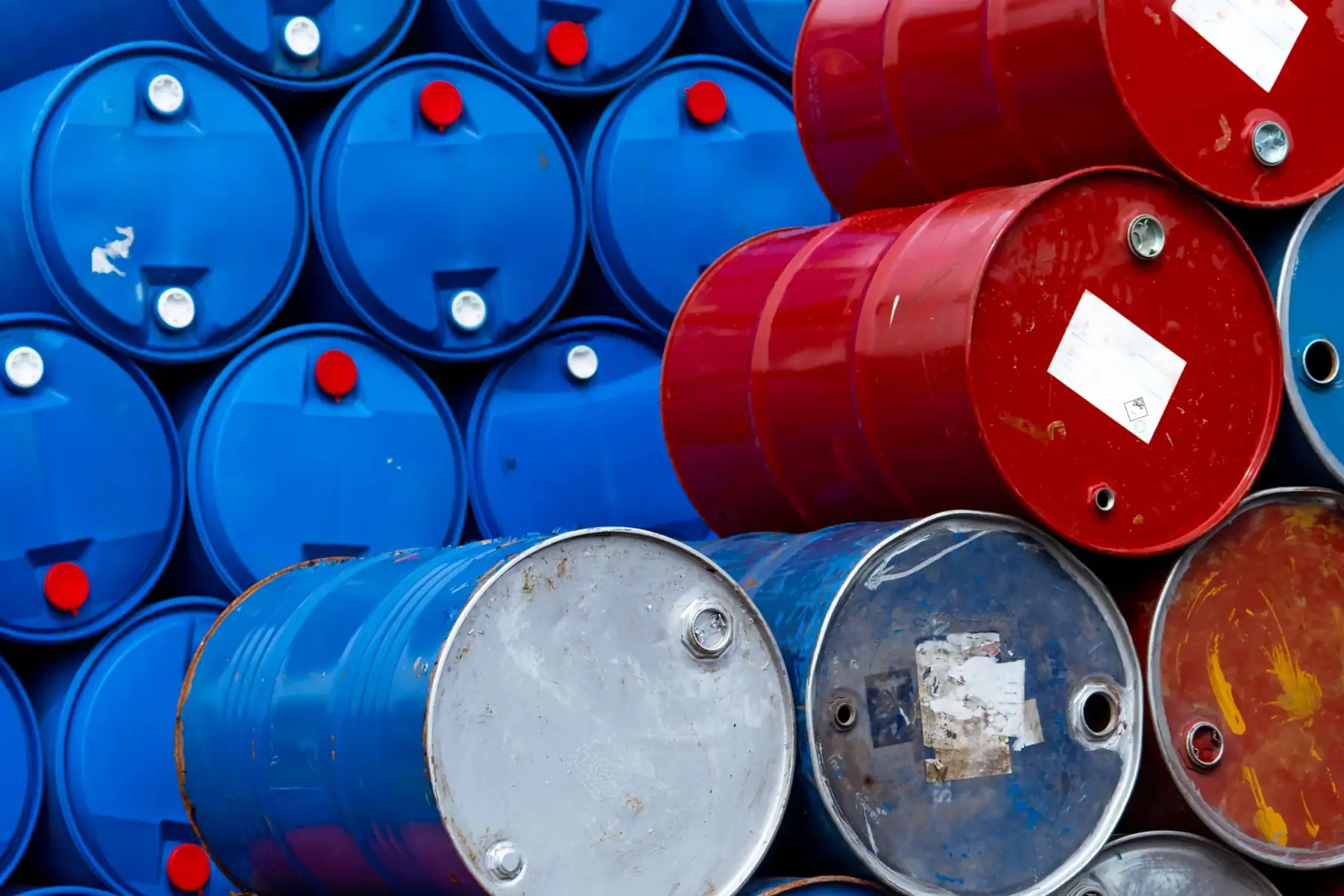
- Steel drums or intermediate bulk containers that are reconditioned and refilled.
- Wooden crates or stillages that are reused on site or by another business.
- Electronic equipment that is tested and passed to a legitimate reuse organisation, where the item still works.
Reuse is not always straightforward. Items may need cleaning, testing or certification before they can be used again. Some materials, such as packaging that has held hazardous substances, may not be suitable for reuse without specialist treatment. The condition of the item and what it previously contained both matter. If a container held a hazardous substance, the empty container may still be classified as hazardous waste unless it has been properly cleaned. That is a classification question, not a hierarchy question, and it should be resolved before deciding on a route.
Recycling
Recycling turns waste material into a new product or raw material. It is the step most industrial sites already use, but quality matters. A mixed skip containing cardboard, plastic, metal and general waste is unlikely to produce high-quality recycled material. Separating streams at source usually improves the outcome.
- Cardboard and paper collected separately and baled to reduce volume and transport emissions.
- Plastic film, rigid plastic and mixed plastics kept apart where the reprocessor requires it.
- Scrap metal sorted into ferrous and non-ferrous grades.
- Glass, wood and mineral wool separated where local reprocessing capacity exists.
- Food waste sent for anaerobic digestion or composting, depending on the material and local arrangements.
Recycling depends on end markets. A material that is recyclable in principle may not be accepted locally if there is no reprocessor nearby or if the material is contaminated. Contamination is a common reason for loads being rejected or downgraded. Simple steps such as covering containers, keeping liquids out of dry recycling and training staff on what goes where can make a difference. We can help with setting up separate collections for recyclable streams and reviewing whether current segregation is working.

Other recovery
Other recovery includes processes that recover energy or material from waste when recycling is not practicable. Energy from waste is the most common example. It sits below recycling but above disposal.
- Refuse-derived fuel produced from residual commercial waste that cannot be recycled.
- Anaerobic digestion of food waste or liquid waste, producing biogas and digestate.
- Solvent recovery or oil recovery, where the material can be reprocessed into a usable product.
- Heat recovery from industrial processes, where waste heat is captured and reused.
Other recovery is not a free pass. Emissions, residues and the energy balance of the process all matter. Some recovery routes produce residues that still need disposal. The environmental benefit depends on what is being recovered and what it replaces. For reporting purposes, energy from waste is usually counted separately from recycling. If a site reports diversion from landfill, it is worth checking whether recovery is included in that figure and how the calculation is defined.
Disposal
Disposal is the least preferable option. It includes landfill and incineration without energy recovery. For industrial waste, disposal is sometimes unavoidable, particularly for certain hazardous wastes or materials that cannot be safely treated or recovered.
- Landfill of residual waste that has no viable recovery route.
- Incineration of hazardous waste where recovery is not technically possible.
- Disposal of asbestos-containing materials at a licensed facility.
- Landfill of treated waste that still contains hazardous properties after treatment.
Disposal can carry landfill tax or other treatment and disposal charges, depending on the route. Cost alone does not decide the hierarchy position. Some wastes, including certain chemical residues or contaminated soils, may have limited recovery options. In those cases, the priority is to classify the waste correctly, document it properly and use an authorised destination. We can help with identifying disposal routes for residual waste and checking that documentation is in order.
How the hierarchy affects cost and reporting
Hierarchy choices show up in two places: the invoice and the report.
On cost, compare the whole arrangement rather than assuming one hierarchy step is always cheaper. Prevention may avoid collection and treatment costs, while reuse or recycling can change handling, container and collection requirements. Recovery and disposal costs vary by material, location, treatment route and contract. Container size, collection frequency and contamination rates can all affect the final figure.
On reporting, the hierarchy provides a structure for describing where waste went. Many businesses report recycling rates, landfill diversion or carbon emissions from waste. The accuracy of those figures depends on the data behind them. A waste transfer note or hazardous waste consignment note records the waste type, quantity and the route it took. That documentation supports traceability. It does not, by itself, prove legal compliance or the environmental benefit of a particular route. If a report claims a recycling rate, the calculation method and the scope of the data should be clear.
For sites working towards zero waste to landfill, the hierarchy is a useful planning tool. It helps identify which streams can be prevented, reused or recycled, and which will still need recovery or disposal. It also helps set realistic targets. A site with a high proportion of hazardous or contaminated waste may not be able to eliminate landfill entirely, but it can often reduce the amount that goes there.
Legal duties and documentation
The duty to apply the hierarchy is part of the wider waste duty of care. In England and Wales, the Waste (England and Wales) Regulations 2011 require waste producers and holders to take all reasonable measures to apply the hierarchy. Regulation 35 requires a declaration on every transfer note confirming that the hierarchy has been applied. The declaration is not a tick-box formality. It is a statement that the waste has been considered in priority order.
Scotland and Northern Ireland have their own regulations. The wording and the forms differ, but the principle is the same. If your site operates across borders, you need to follow the rules that apply where the waste is produced or handled. The waste duty of care code of practice provides detailed guidance for England and Wales.
Classification is a separate step. Before deciding on a hierarchy route, you need to know what the waste is. The waste classification technical guidance explains how to assess and classify waste. A material that is hazardous may have fewer recovery options than a non-hazardous one. You cannot assume that a treatment process, such as dewatering, makes a waste non-hazardous. The resulting waste still needs to be classified from its composition and hazardous properties, not from its physical state alone.
For hazardous waste, there are additional requirements. The hazardous waste guidance sets out the duties for producers, carriers and consignees in England. Similar rules apply in Scotland, Wales and Northern Ireland, with different regulators and forms. If you are unsure whether a waste is hazardous, get it classified before choosing a route.
Applying the hierarchy in practice
Applying the hierarchy is not a one-off exercise. It is a cycle. Review waste streams, check what is technically and economically possible, and document the decision. A waste audit can provide the baseline data. From there, you can identify quick wins, such as separating cardboard or scrap metal, and longer-term changes, such as process modifications or supplier agreements.
Some decisions need specialist input. Work in confined spaces, such as tank cleaning or pit emptying, is safety-critical and must be carried out by competent specialists. The confined spaces legislation sets out the duties. Do not attempt this work without the right training, equipment and emergency arrangements.
We can help with reviewing waste streams, identifying hierarchy options and arranging collections for recyclable, recoverable and residual waste. If you need to understand where your waste currently goes and what could change, a waste audit is a sensible starting point.
Free online tool
Waste Duty of Care Checker
Review common waste paperwork and collection questions relevant to your site.
Common questions
Frequently asked questions
Is the waste hierarchy a legal requirement?
Yes, in England and Wales the Waste (England and Wales) Regulations 2011 require waste producers and holders to apply the hierarchy in priority order. Scotland and Northern Ireland have equivalent duties under their own regulations. The duty is part of the wider waste duty of care.
Does the waste hierarchy apply to hazardous waste?
Yes, but the options may be more limited. Hazardous waste must be classified first, and some recovery routes may not be suitable. The hierarchy still applies, but the practical choices depend on the properties of the waste and the facilities available.
What does the declaration on a waste transfer note mean?
In England and Wales, regulation 35 requires a declaration confirming that the hierarchy has been applied. It is a statement that the waste producer or holder has considered prevention, reuse, recycling, recovery and disposal in that order. It is not a guarantee that the most preferable option was chosen in every case.
Can dewatering make a waste non-hazardous?
Not automatically. Dewatering changes the physical form and may change the concentration of substances in the remaining waste, but it does not establish a non-hazardous classification. The dewatered waste still needs to be assessed against the applicable classification rules.
How does the hierarchy affect waste reporting?
The hierarchy provides a structure for reporting where waste went. Recycling rates, landfill diversion and carbon figures depend on accurate data from transfer notes and consignment notes. Those documents support traceability, but they do not by themselves prove legal compliance or environmental benefit.
Request a quote
Complete the form and we will get back to you.