
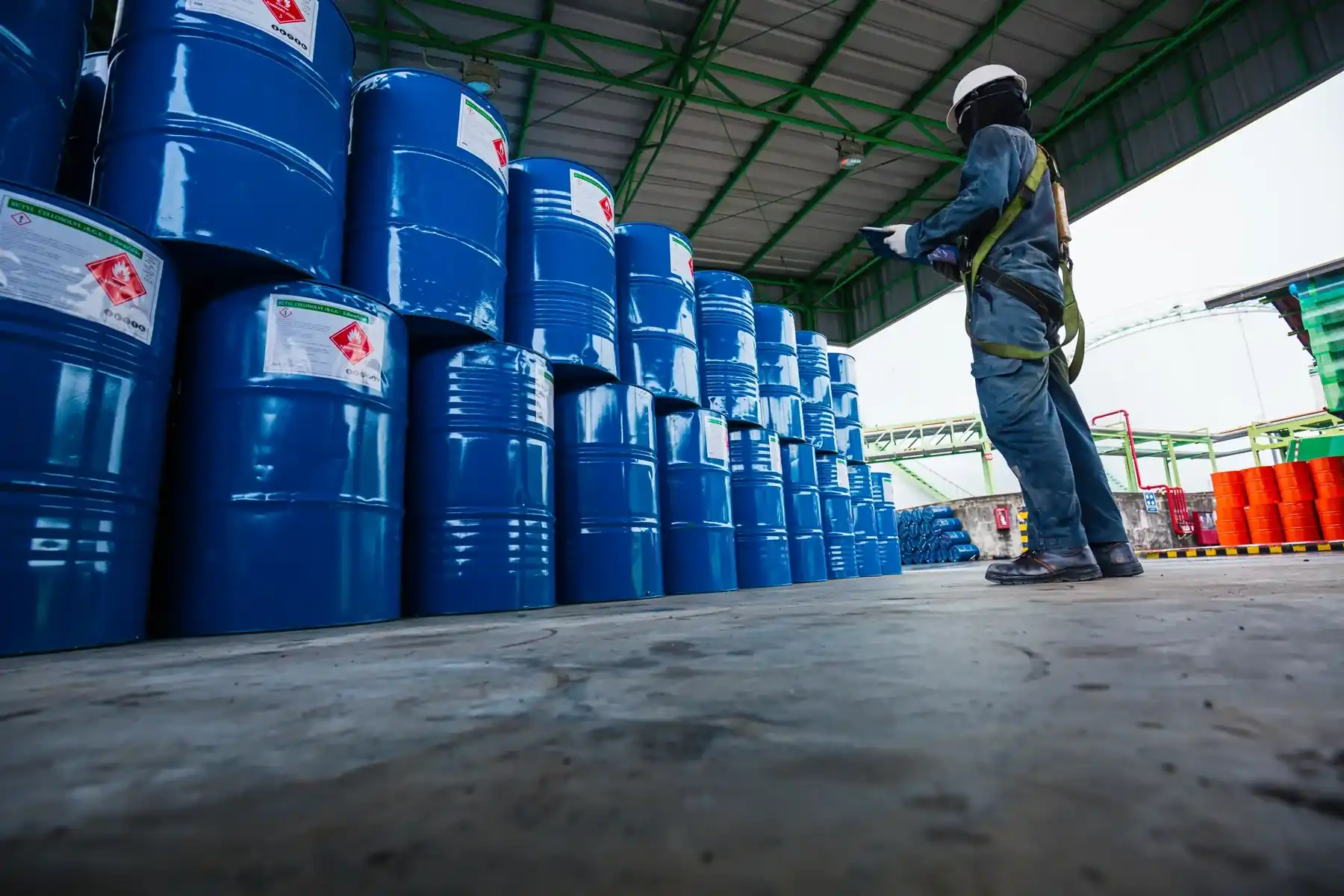
Waste services for industry
Industrial Waste Disposal
Industrial waste disposal is a chain of decisions, not a single destination. The material, its classification and the permitted site all shape where waste can go. We can help with one-off backlogs and scheduled disposal alike.
What industrial waste disposal involves
Disposal is the last option in the waste hierarchy, but it is not the only outcome of a collection. Industrial waste may be reused, recycled, recovered, treated or disposed of depending on the material and the available authorised route. The route depends on what the material is, how it has been classified, and which sites can lawfully accept it.
A single factory can produce several streams with different destinations. Offcuts of clean plastic may be recycled. Oily water may need physico-chemical treatment. Spent solvents may go to incineration with energy recovery. General floor sweepings may go to a transfer station for sorting. Treating them as one waste stream usually costs more and loses recoverable material.
We can help with industrial waste disposal where the route needs to be matched to the material, whether it is a recurring waste stream or a one-off clearance.
How the disposal route is chosen
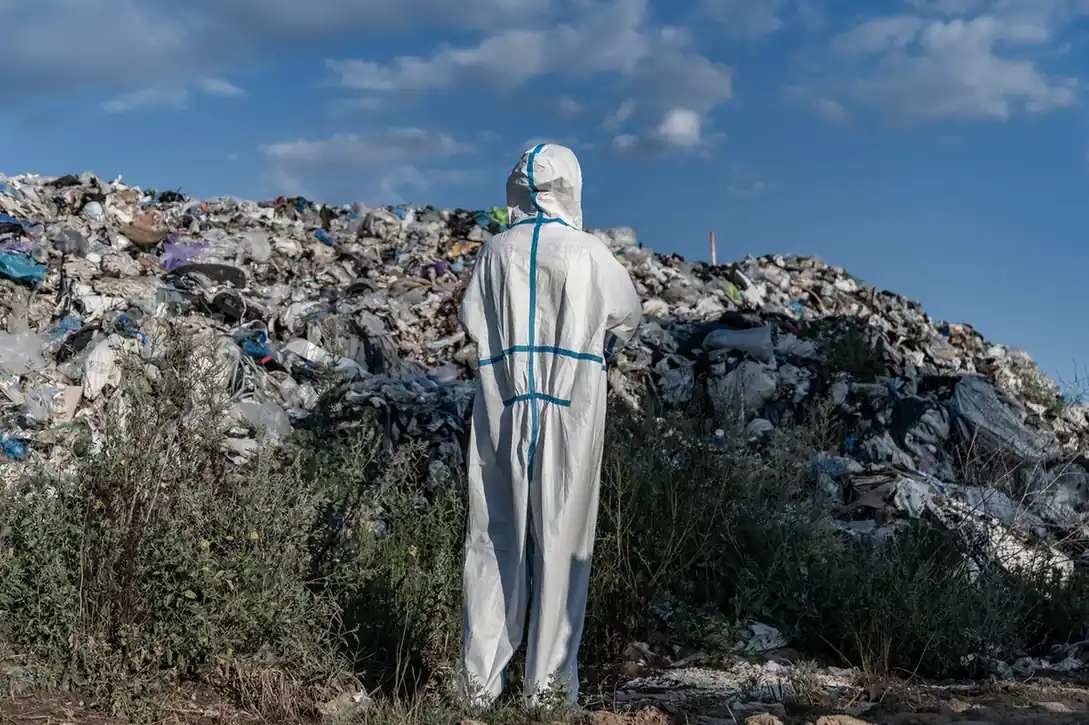
The first step is classification. Under the List of Waste, each waste is given a six-digit code and, where relevant, a hazardous property. The code is not decided by the material name alone. The same description can cover wastes with different properties depending on the process that produced them, the concentration of contaminants and the physical form.
Classification follows the WM3 technical guidance used by the UK environmental regulators. It requires information about the process and waste composition, and laboratory analysis may be needed where the available information is not enough. A waste cannot be assumed to be non-hazardous because it looks ordinary, and it cannot be assumed to be hazardous because of its name.
The waste hierarchy should be considered when the route is chosen. Prevention, preparing for reuse, recycling and other recovery come before disposal as the priority order, although the appropriate route still depends on the actual waste and the available authorised options. Landfill is one disposal route and the receiving site must be authorised to accept the waste.
The receiving site must be permitted for the specific waste. A site permitted for non-hazardous waste cannot accept hazardous material, and some sites are limited to particular treatment processes. This is why the same waste can have different destinations in different parts of the UK.
Treatment and recovery routes
Physico-chemical treatment is common for liquid industrial waste. It uses chemical reactions to neutralise acids, break emulsions, precipitate metals or separate oils. The treated liquid may then be discharged to sewer under a trade effluent consent, or sent for further treatment. The separated sludge or concentrate is itself a waste and needs its own classification and route.
Biological treatment is used for wastewaters with organic content that can be broken down by micro-organisms. It suits certain food, drink and pharmaceutical effluents, but it is sensitive to toxic loads and to sudden changes in strength. A tanker of high-strength effluent can upset a biological plant if it arrives without warning.
Incineration with energy recovery may be an option for some wastes that are not suitable for recycling or another recovery route, including certain solvents, oils and contaminated materials. The receiving plant must be authorised for the waste, and any residues from the process need their own classification and management route.
Landfill remains necessary for some residues, including certain treated sludges, asbestos-containing materials and wastes with no recoverable content. Landfill operators apply waste acceptance criteria, which are tests and limits that determine whether a waste can be accepted at a particular landfill class. Passing WAC does not replace classification; it is an additional check for that site.
We can help with industrial waste treatment options where a liquid or sludge stream needs a route that matches its chemistry and its volume.
One-off removals and scheduled disposal
Scheduled disposal suits steady production, where the same waste arises at a predictable rate. Containers are exchanged or emptied on a cycle, and the paperwork follows the same pattern each time. The main risk is drift: a process change alters the waste, but the old classification is still used.
One-off removals cover backlogs, spoiled batches, discontinued product lines and clearances before a site changes hands. These need more attention at the start, because the waste may have been stored for some time and its condition may have changed. Labels fade, containers corrode and drums lose their lids. A batch that was classified years ago may need re-checking before it can move.
Production changes are a common trigger. A new coating, a different cleaning chemical or a change in raw material can alter the waste code and the permitted route. It is worth reviewing classifications when the process changes, not only when the waste is collected.
We can help with one-off industrial waste disposal for accumulated material, and with scheduled collections where the arisings are regular.
Paperwork for each route
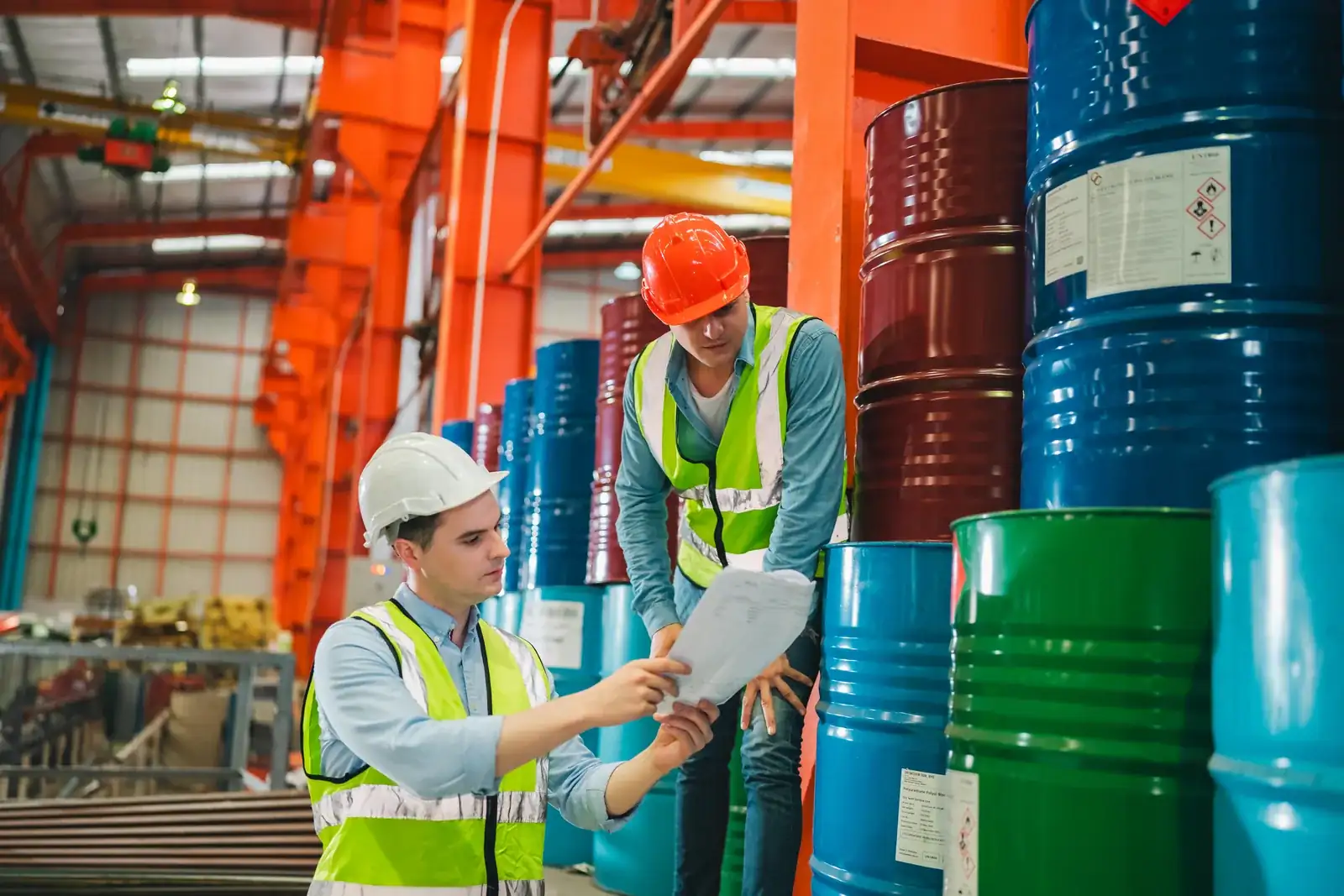
Non-hazardous waste movements in England and Wales are usually covered by a waste transfer note. Hazardous waste movements use a consignment note, which records the producer, the carrier and the receiving site, along with the waste code and description. Scotland and Northern Ireland have their own systems, and cross-border movements need the correct documents for each jurisdiction.
The duty of care applies to everyone who produces, carries, keeps, treats or disposes of controlled waste. It requires waste to be stored safely, transferred only to authorised persons, and described accurately. The duty of care code of practice is issued under section 34 of the Environmental Protection Act 1990 and applies in England and Wales. Scotland and Northern Ireland have separate codes.
Documentation supports traceability. It records what moved, when and to where. It does not, by itself, prove that a waste was classified correctly or that a site operated within its permit. Those depend on the accuracy of the information supplied and on the site’s own compliance.
Where a route produces a recovered output, such as recycled aggregate or recovered oil, the receiving site may issue a certificate or report. The contents depend on the agreed specification and on what the site actually measures. Not every treatment route produces a certificate, and a certificate is not a substitute for the producer’s own duty of care.
Classification and the limits of a name
A waste name is a starting point, not a classification. Two factories can produce a waste both called ‘spent caustic’, with different concentrations of contaminants and different hazardous properties. One may be non-hazardous; the other may not. The only reliable approach is to classify the actual waste from the actual process.
Where a waste is suspected of being hazardous, the classification should be confirmed before collection is arranged. This affects the carrier, the receiving site, the documentation and the cost. Moving a hazardous waste as non-hazardous is a serious matter, and it can lead to the waste being refused at the gate.
We can help with industrial waste disposal where the classification needs to be established first, including cases where a process change has made the previous code uncertain.
Decisions that affect cost and compliance
Segregation at source is often one of the most practical improvements. Keeping clean recyclables apart from general waste can reduce the volume needing treatment or disposal and lowers the risk of a non-hazardous stream being contaminated by hazardous material.
Storage matters too. A waste that is stored in the open may collect rainwater, increasing its volume and changing its character. A liquid waste that is stored in a corroded container may leak, creating a new contaminated waste and a cleanup problem. Containers should be suitable for the waste, labelled and kept in a secure area.
Volume and frequency affect the route. A small quantity of a hazardous waste may be consolidated with other compatible wastes, but only where the receiving site is permitted for the mixture. A large volume may justify a dedicated treatment route. The cost drivers include the waste code, the hazardous properties, the physical form, the water content, the packaging and the distance to a permitted site.
Prices require a real quote. The drivers are specific to the waste and the site, and a figure given without those details is not reliable.
Where to check the rules
The Environment Agency publishes technical guidance on waste classification, and the duty of care code of practice sets out the legal framework in England and Wales. The Health and Safety Executive publishes guidance on confined space work, which is relevant where tanks or silos need cleaning before disposal. These are starting points, not substitutes for advice on a specific waste.
We can help with industrial waste disposal for a single stream or a mixed site, including the classification, the route and the paperwork that follows.
Free online tool
Waste Duty of Care Checker
Review common waste paperwork and collection questions relevant to your site.
Common questions
Frequently asked questions
Does a waste transfer note prove the waste was classified correctly?
No. A transfer note records the movement and the description given by the producer. It supports traceability, but it does not confirm that the classification was right. The producer remains responsible for the accuracy of the description.
Can a liquid waste be discharged to sewer after treatment?
Sometimes, but only where the discharge is covered by the required trade effluent consent and meets its conditions. Those conditions can include limits on flow, pH, suspended solids and other parameters. Treatment does not automatically make a waste suitable for discharge to sewer.
Is landfill always the final destination for industrial waste?
No. Industrial waste can be reused, recycled, recovered or treated, and landfill is only one possible route. Where landfill is used, the site must be authorised to accept that waste.
What changes if a process produces a different waste?
The classification may change, and with it the permitted route and the paperwork. A new raw material or cleaning chemical can alter the hazardous properties. It is worth reviewing the classification when the process changes, not only when the waste is collected.
Do the rules differ across the UK?
Yes. England and Wales share the duty of care code of practice and the transfer note system. Scotland and Northern Ireland have their own codes and documentation. Cross-border movements need the correct documents for each jurisdiction.
Request a quote
Complete the form and we will get back to you.