
Waste services for industry
WEEE Recycling
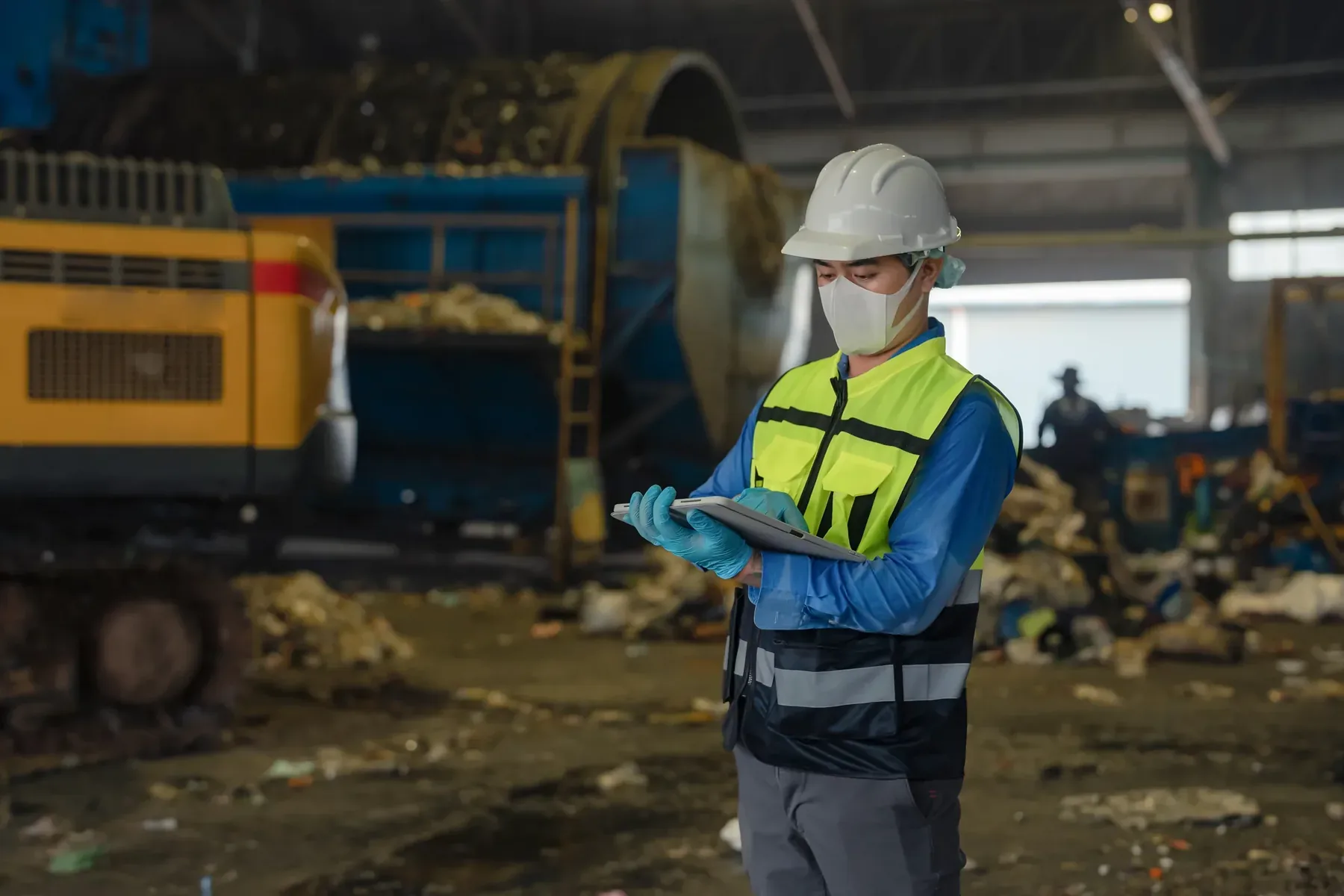
Waste electrical and electronic equipment turns up across most industrial sites, from server racks and control panels to motors, drives, lighting and cable. Some items carry hazardous components or stored data, so the collection method and paperwork need to match what is actually being removed.
What counts as WEEE from an industrial site
WEEE is electrical or electronic equipment that has become waste. On industrial and commercial premises this is rarely limited to office computers. A typical clear-out or upgrade can include control panels, variable speed drives, contactors, motors, pumps, sensors, instrumentation, industrial lighting, emergency lighting, server and network equipment, printers and small appliances used in workshops and canteens. Cable removed separately may be managed as a separate waste stream rather than assumed to be WEEE.
The mix matters because different items follow different treatment routes. A steel motor housing and a plastic monitor casing are not the same problem. Cable may contain copper worth recovering, while older fluorescent tubes and lamps need separate handling because of the mercury they contain. Sorting at the point of removal reduces contamination and keeps recoverable materials clean enough to be recycled rather than lost in a mixed load.
We can help with WEEE recycling for businesses that need old equipment removed from a site, whether that is a single rack of servers or a full electrical strip-out during a refit.
Hazardous components in electrical equipment
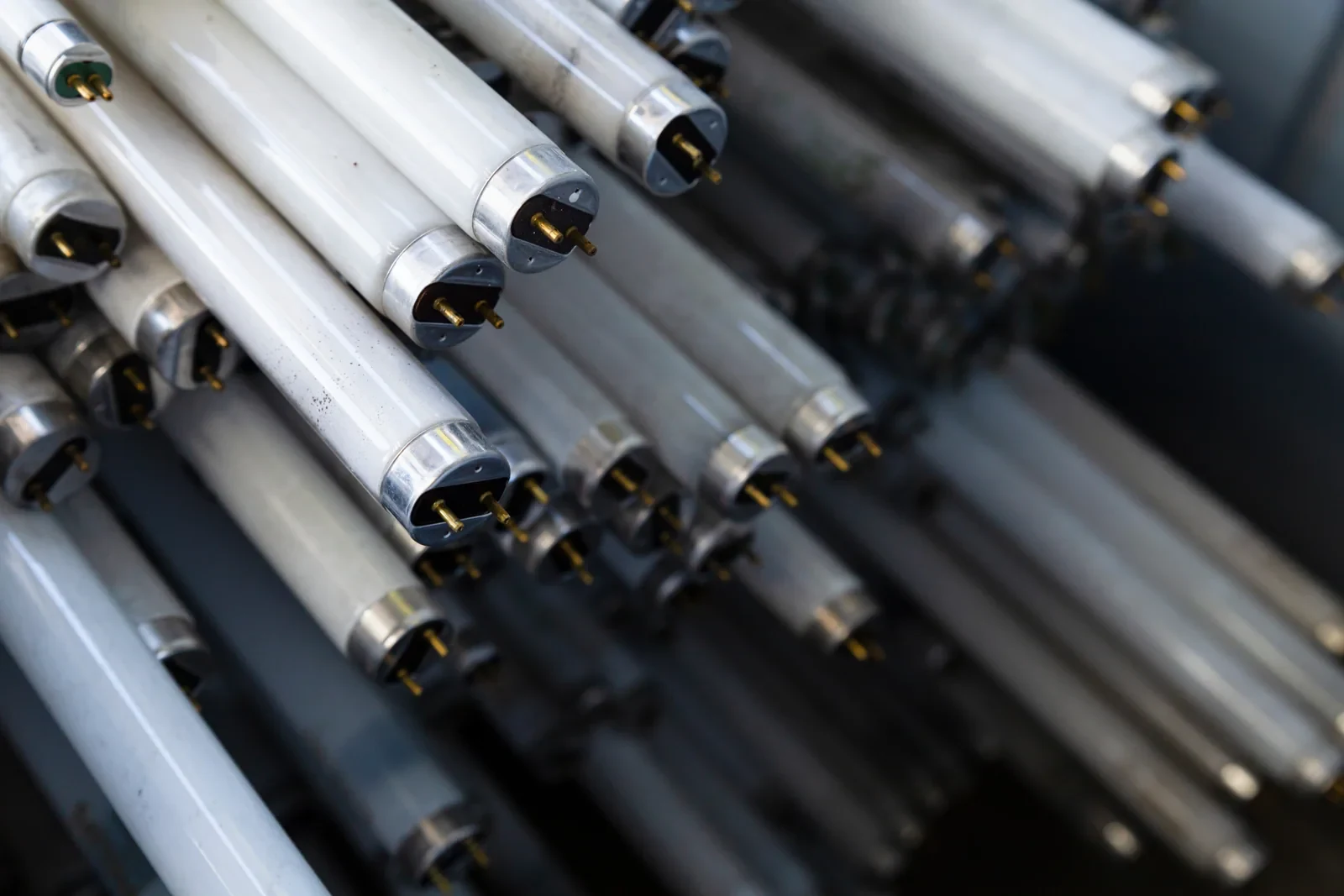
Some WEEE contains substances that make it hazardous waste, and that changes the paperwork and the treatment route. Common examples include cathode ray tubes in older monitors, fluorescent tubes and lamps containing mercury, batteries of all chemistries, capacitors that may contain polychlorinated biphenyls, and refrigeration equipment holding ozone-depleting or fluorinated gases.
It is not possible to decide whether an item is hazardous from its name alone. A sealed fluorescent tube and a broken one are handled differently, and a capacitor is only a problem if it contains the substances that trigger classification. The correct approach is to classify the waste using the Environment Agency’s technical guidance, which sets out how to assess a waste and assign a List of Waste code. Where the classification is uncertain, sampling or manufacturer information may be needed before a collection is arranged.
Hazardous WEEE needs the movement paperwork required in the nation where it arises. In England and Wales this is a hazardous waste consignment note. Scotland uses the special waste consignment note system, and Northern Ireland has its own hazardous waste arrangements. Cross-border movements should be checked against the relevant regulator’s requirements.
Data-bearing devices and IT equipment disposal
Hard drives, solid state drives, servers, laptops, mobile devices and multifunction printers can all hold business or personal data. When IT equipment disposal is part of a wider clear-out, the data question usually decides the method. Some organisations remove and retain their own drives. Others need the storage media destroyed or wiped before the equipment leaves the site.
Software wiping and physical destruction are different services with different evidence. A wipe produces a record of the process; shredding or degaussing destroys the media so it cannot be read. Either way, the evidence you receive should describe what was done and to which assets. If your organisation works to a data protection framework, agree the standard before collection so the treatment matches what your records need to show.
We can help with IT equipment disposal where data-bearing devices need a documented route, including wiping or destruction arranged before recycling.
Producer and distributor take-back
The UK WEEE Regulations place obligations on producers of electrical equipment and on distributors who sell it. Retailers and distributors above certain thresholds have take-back duties, and producers fund the collection and treatment of household WEEE through compliance schemes. These obligations are aimed mainly at household and consumer equipment.
Business WEEE is treated differently from household WEEE. Who finances collection and treatment depends on factors including when the equipment was placed on the market, whether it is being replaced with equivalent equipment and any alternative arrangement between the producer and business end-user. A business should not assume either that a household retailer take-back scheme applies or that it must always bear the full cost itself. The duty of care still applies to the waste holder.
It is worth checking whether any equipment is still usable before treating it as waste. Reuse sits above recycling in the waste hierarchy, and working equipment passed to a legitimate reuse organisation avoids the treatment process altogether. The WEEE Regulations guide sets out how the producer and distributor duties fit together.
Collection, treatment and evidence
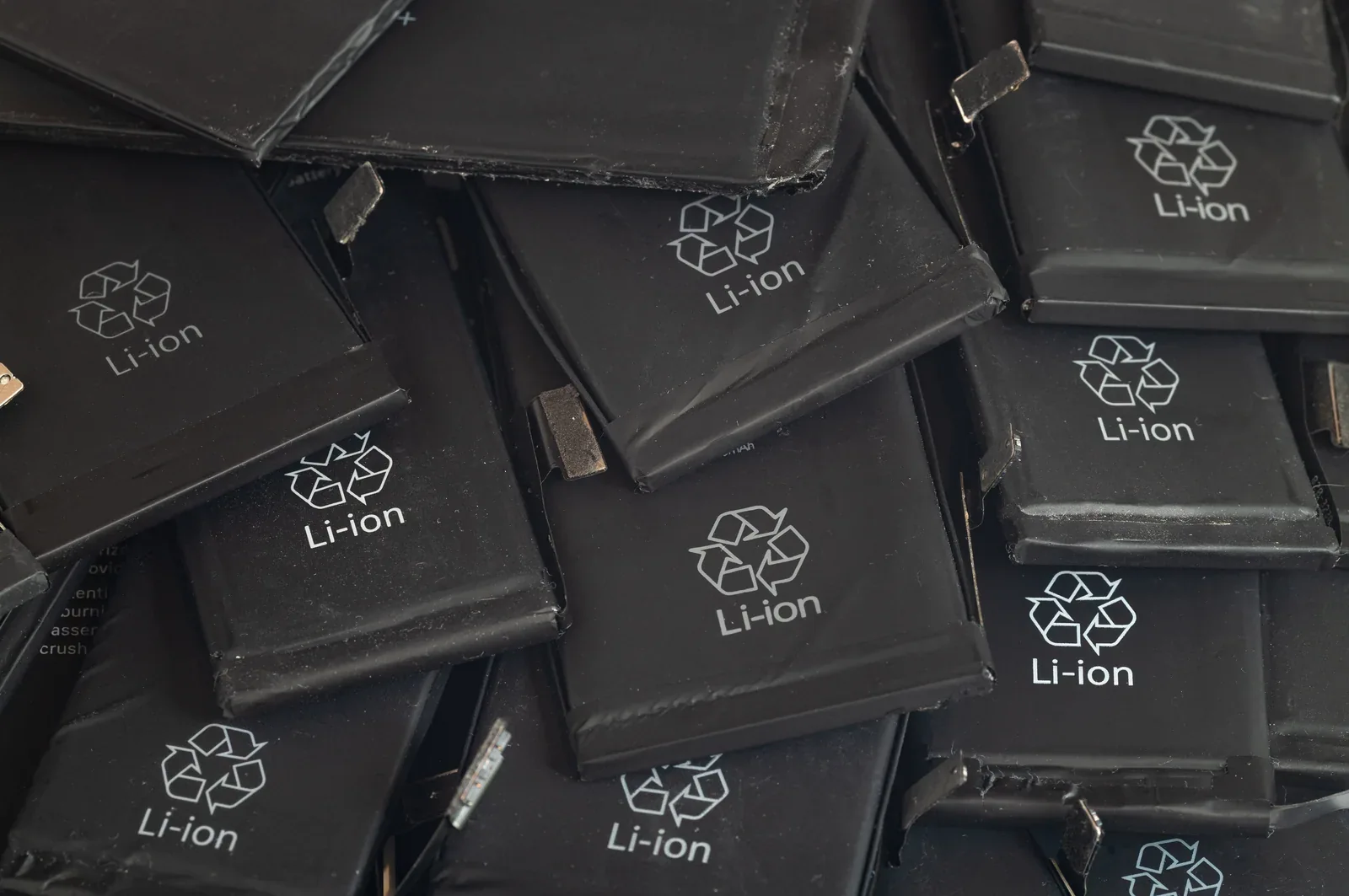
WEEE is bulky and often fragile, so the collection method depends on volume, access and how the items are stored. Small items can be palletised or boxed; larger equipment may need a suitable container or dedicated vehicle. Batteries may need to be removed and kept separate depending on the equipment and receiving route. Loose lithium batteries can present a fire risk and should not be placed into a mixed load without an agreed route.
WEEE should be sent to a facility authorised for the treatment it will carry out. An approved authorised treatment facility (AATF) has additional approval to issue WEEE evidence through the producer compliance system. The records you receive should connect the waste you produced to the treatment that took place. Waste documentation supports traceability; it does not by itself prove legal compliance, so it is worth checking that the description, codes and quantities match what actually left your site.
We can help with WEEE collection and disposal where you need the treatment route and the paperwork to line up, including loads that mix hazardous and non-hazardous items.
Planning a WEEE clear-out
A clear-out goes more smoothly when the equipment is surveyed before anything is moved. A short walk-round can establish what is present, which items hold data, which contain hazardous components, and what access is available for removal.
- List the equipment by type and rough quantity, including anything still connected or in use.
- Identify data-bearing devices and decide whether they are wiped, destroyed or retained.
- Flag hazardous items such as tubes, lamps, batteries and refrigeration equipment.
- Check whether any equipment can be reused rather than recycled.
- Confirm access, loading arrangements and any permits needed for the collection.
Where a site is being cleared entirely, WEEE is often only part of the job. A factory clearance can deal with the wider removal, while a waste audit helps establish what the site produces over time rather than in a single clear-out. For mixed loads that include packaging and general recyclables, industrial recycling covers the non-electrical side.
Where WEEE fits with other waste streams
Most industrial sites produce WEEE alongside other waste, and keeping the streams separate is usually cheaper and simpler than sorting a mixed load later. Scrap metal from frames and housings can go to a metal recycler. Cable can be stripped for copper recovery. Packaging from new equipment is often cardboard and plastic, which falls under the workplace recycling rules in England.
Those rules changed on 31 March 2025, with micro-firms given until 31 March 2027 to comply. They require workplaces in England to separate dry recyclables, food waste and residual waste before collection. Similar requirements differ across Wales, Scotland and Northern Ireland, so a site operating in more than one nation should check each set of rules rather than applying one approach everywhere.
If your site also handles oils, solvents or other hazardous streams, hazardous waste management covers the wider picture. The aim with WEEE is straightforward: get the equipment off site through a route that recovers what it can, handles the hazardous parts properly, and leaves you with records that match what was removed.
Free online tool
Waste Duty of Care Checker
Review common waste paperwork and collection questions relevant to your site.
Common questions
Frequently asked questions
Is all WEEE hazardous waste?
No. Much of it is non-hazardous, but certain items contain hazardous components. Cathode ray tubes, fluorescent tubes and lamps, batteries, some capacitors and refrigeration equipment are common examples. Whether a specific item is hazardous depends on its composition, so classification should follow the Environment Agency's technical guidance rather than the item's name.
Can I put old IT equipment in a general skip?
WEEE should be kept separate from general waste so it can be treated and the recoverable materials extracted. Data-bearing devices also need a decision about wiping or destruction before they leave site. Mixing them into a general skip removes both the treatment route and the evidence you would otherwise hold.
Does the retailer take-back scheme cover business WEEE?
Distributor take-back duties mainly concern WEEE from private households. For business WEEE, financing depends on when the equipment was placed on the market, whether equivalent equipment is being replaced and any alternative agreement between the producer and business end-user. Check the producer or compliance scheme arrangements before assuming who pays.
What paperwork should I get for WEEE?
Non-hazardous WEEE normally moves with the required waste transfer information. Hazardous WEEE uses the hazardous or special waste consignment system that applies where the waste arises: England and Wales use hazardous waste consignment notes, while Scotland uses special waste consignment notes. Northern Ireland has its own arrangements. The documents should describe the waste, codes and quantities accurately.
Can batteries be left in the equipment?
Whether batteries should be removed before collection depends on the equipment, the battery type and the receiving route. Loose lithium batteries can present a fire risk and should be kept out of mixed loads unless an agreed collection route allows them. Do not dismantle equipment simply to remove a battery unless that work can be done safely.
Request a quote
Complete the form and we will get back to you.