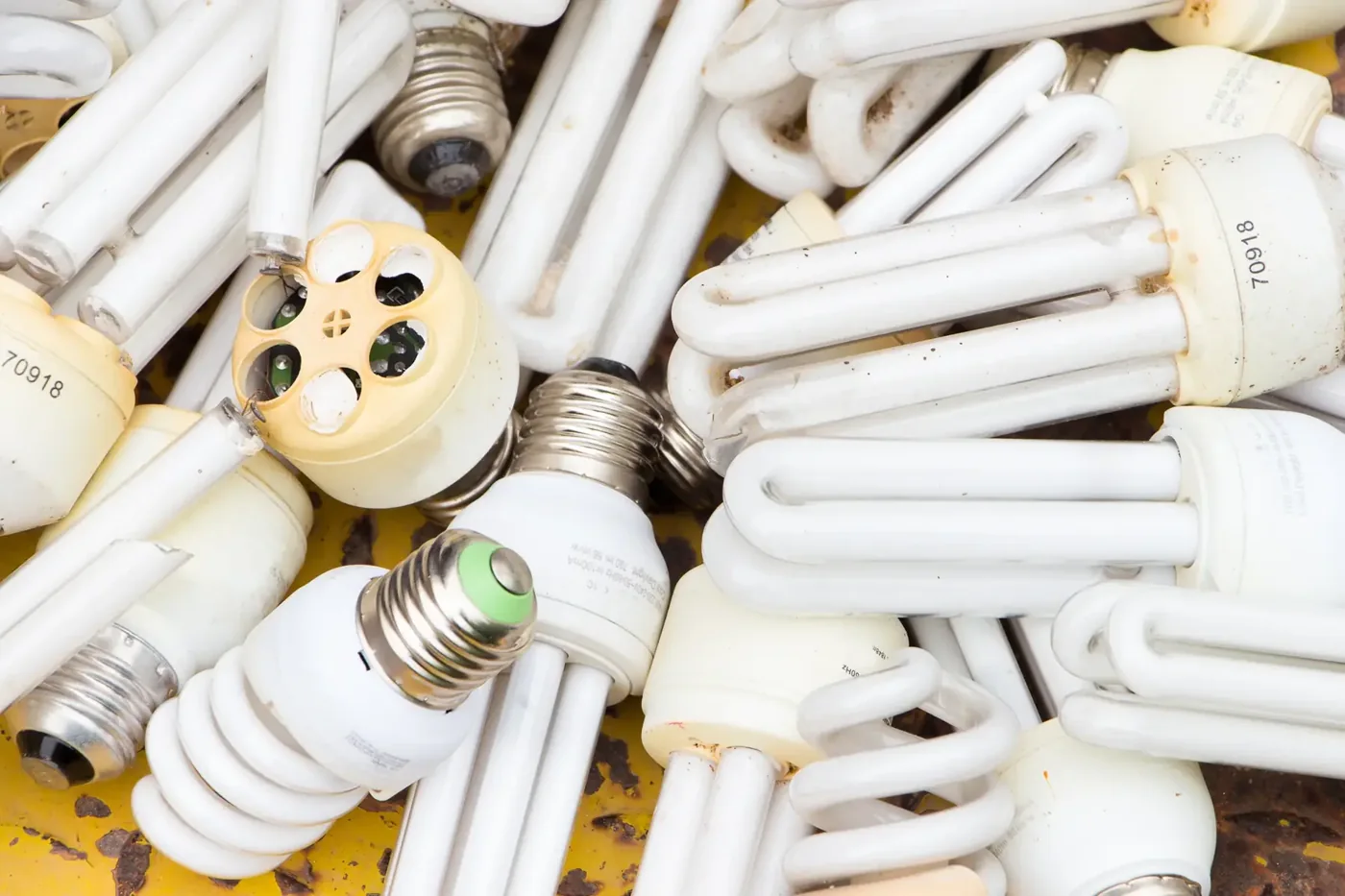
Fluorescent tubes and LED lamps should not automatically go into the same waste collection stream when commercial lighting is replaced. Fluorescent tubes are classified as hazardous waste because of their hazardous components, including mercury. LED lamps require a separate assessment because their classification depends on the substances they contain.
For facilities managers replacing lighting across factories, warehouses or commercial premises, identifying the different lamp technologies before collection helps establish the correct waste codes, handling arrangements and treatment routes.
Why the type of lamp matters
Although fluorescent and LED lamps perform similar lighting functions, their internal construction differs. A fluorescent tube produces light through an electrical discharge involving mercury vapour. LED technology uses semiconductor components and electronic circuitry.
These differences affect how the waste must be assessed. The Environment Agency’s guidance on classifying waste electrical and electronic equipment identifies different classifications for industrial and commercial lamps.
Linear fluorescent tubes
Linear fluorescent tubes are classified as hazardous, non-POPs waste under code 16 02 13* for industrial and commercial sources in England. The asterisk identifies a hazardous waste code.
The presence of mercury means these tubes require appropriate handling and must not be treated as ordinary glass waste. Keeping intact tubes protected during storage and collection also reduces the risk of breakage.
LED lamps containing hazardous substances
An LED lamp is not automatically non-hazardous simply because it contains no mercury. Electronic components, plastic housings and flame retardants can introduce other substances that affect classification.
The Environment Agency lists LEDs containing persistent organic pollutants (POPs) and hazardous substances as hazardous and POPs waste, using industrial or commercial code 16 02 13*.
Hazardous classification and POPs classification are separate questions. An LED can require hazardous-waste controls without necessarily meeting the criteria for POPs waste. The assessment must establish the relevant substances and their levels rather than assuming that every hazardous LED also contains POPs.
Where POPs are present at levels requiring POPs classification, the waste cannot be reused or recycled. It must follow an authorised treatment or disposal route that meets the applicable POPs requirements.
Other LED lamps
LED lamps assessed as not containing POPs and meeting the non-hazardous classification requirements can fall under industrial or commercial code 16 02 14.
This distinction matters when a site has already converted some lighting to LED but still has older fluorescent fittings elsewhere. Appearance alone is not sufficient evidence of the correct classification.
Planning separate lamp collections
Before a lighting replacement project begins, establish which lamp types will be removed and approximately how many of each are involved. Useful information includes:
- Whether the existing lamps are linear fluorescent tubes, compact fluorescent lamps or LEDs.
- Any manufacturer or product information that helps identify hazardous components.
- Whether lamps are intact or have already been damaged.
- Whether removed fittings and electronic components will form additional waste streams.
- Where each identified lamp category can be stored separately before collection.
Compact fluorescent lamps also need distinguishing from linear tubes. The Environment Agency identifies compact fluorescent lamps and other non-linear gas discharge lamps as hazardous and POPs waste, unlike its classification of linear fluorescent tubes.
What happens if the lamps are mixed?
Mixing different lamp categories complicates classification and may prevent non-hazardous lamps from being managed through their intended route. Where differently classified electrical waste is placed in one container, the relevant waste classification codes must be accounted for.
Separate collection is generally a clearer practical approach where the lamp types are identifiable. It also allows suitable packaging to be selected for fragile fluorescent tubes rather than treating every lamp as an interchangeable electrical item.
For an overview of the broader obligations affecting electrical equipment, see the site’s WEEE regulations guide.
Choosing the appropriate disposal route
The final decision should reflect the actual lamp composition, hazardous classification and receiving facility’s acceptance requirements. The number of lamps alone does not determine whether a collection can use a non-hazardous route.
Where hazardous lamps are involved, the applicable hazardous waste documentation and authorised treatment arrangements must be established before removal. A correctly identified non-hazardous LED stream may follow a different route.
For commercial lighting replacement projects involving multiple lamp technologies, WEEE recycling arrangements should therefore be based on the individual waste categories rather than a single description such as used lightbulbs.