
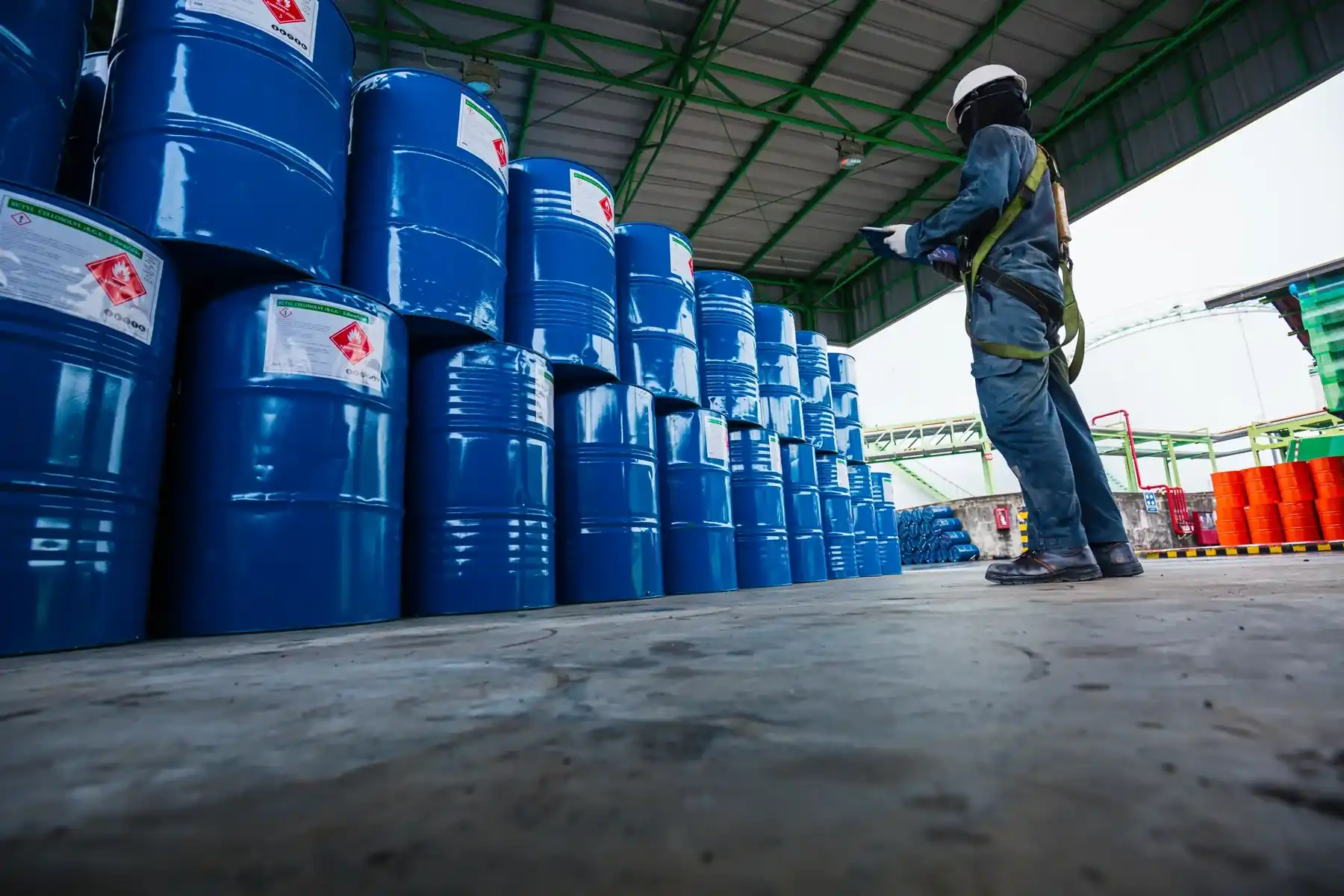
Waste services for industry
Digital Waste Tracking
Digital waste tracking introduces electronic reporting of waste movements. The receiving-site phase began in England and Wales on 1 October 2026, with Northern Ireland and Scotland due to follow in January 2027. The duties depend on the operation and the waste received.
What digital waste tracking is
Digital waste tracking adds structured electronic reporting of covered waste movements to regulators. Existing transfer-note and consignment-note duties continue unless the applicable rules expressly change them. The intention is a live national picture of where waste goes, rather than a patchwork of transfer notes and consignment notes that are difficult to reconcile.
The first phase applies to permitted receiving sites. From 1 October 2026, licensed or permitted sites in England and Wales must report covered controlled waste receipts, subject to the published scope and exclusions, through the Report receipt of waste service. The receiving-site requirement begins in Northern Ireland and Scotland on 1 January 2027. The second phase, from October 2027, is planned to bring waste collectors into the service.
The legal basis in England and Wales sits in the Digital Waste Tracking (England) Regulations 2026 and the Digital Waste Tracking (Wales) Regulations 2026. Scotland and Northern Ireland have their own arrangements, so a business operating across borders should not assume one set of rules covers every site.

Who is affected and when
The timeline below reflects published government guidance checked on 2 October 2026. England and Wales are now in Phase 1. Future dates should still be checked against the current national implementation guidance.
| Phase | Who | Nation | Start date |
|---|---|---|---|
| Phase 1 | Permitted receiving sites | England and Wales | 1 October 2026 |
| Phase 1 | Permitted receiving sites | Northern Ireland and Scotland | 1 January 2027 |
| Phase 2 | Waste collectors (planned phase) | UK programme; check national implementation | October 2027 |
If you produce waste but do not receive it, you are not in Phase 1. You continue to complete waste transfer notes and hazardous waste consignment notes as normal. The practical change for producers is that your collector or receiving site will need more accurate data from you, because the site must submit it within two working days of receiving the load.
What receiving sites must report
The Report receipt of waste service requires details of each load. The data set includes waste movement, carrier and receiver details, waste classification codes, recovery and disposal codes, persistent organic pollutant data and hazardous waste data.
Waste classification codes are the List of Waste codes, also called European Waste Catalogue codes. Recovery and disposal codes come from Annexes I and II of the Waste Framework Directive. For hazardous waste, the site must record applicable hazardous property codes, chemical or biological components, and concentration values. Where a substance exceeds the concentration limit in Appendix C, Chapter 16 of the waste classification technical guidance, the hazard code POP is used.
Records must be submitted within two working days, starting the day after receipt. If a submission is rejected, the error must be corrected within the same window. Piped waste has separate timing rules: where waste is piped over more than one day, the clock starts after the last load, and continuous piping follows the end of the quarter or the day piping stops, whichever is earlier.
Until further notice, waste transfer notes and hazardous waste consignment notes continue alongside the digital service. Digital reporting does not replace those documents.
What producers and carriers should prepare
Producers are not yet required to use the service, but the quality of their paperwork now affects whether a receiving site can report accurately. A transfer note that describes waste as general industrial waste is not enough when the site must submit a specific classification code and, for hazardous loads, component and concentration data.
Useful preparation includes:
- Checking that each waste stream has a current classification and a code that matches what is actually in the container.
- Keeping descriptions consistent between the transfer note, the consignment note and what the driver records.
- Reviewing whether hazardous properties are documented with enough detail for a receiving site to submit HP codes and concentrations.
- Asking your receiving site what format and fields it needs, because the Phase 1 digital submission duty sits with the receiving site. Producers and carriers still need to provide accurate information for the waste movement.
The government plans a further phase for waste collectors from October 2027. The data they will need to submit is not yet fully in force, and the exact fields may be confirmed closer to the date. It is reasonable to begin aligning collection records now so that the transition is not a last-minute rebuild.

Digital exclusion and alternative routes
Some organisations are treated as digitally excluded. The published criteria cover age, disability or location that make digital tools impractical, and businesses run entirely by practising members of a religious society whose beliefs are not compatible with electronic communications or records. Preferring paper, being unfamiliar with software, or finding compliance costly or time-consuming do not count as digital exclusion.
Digitally excluded sites follow a different process for submitting data. That process should be confirmed with the relevant regulator rather than assumed.
How this fits with duty of care
Digital waste tracking does not replace the waste duty of care. The duty of care applies to anyone who imports, produces, carries, keeps, treats, disposes of, or as a dealer or broker has control of controlled waste in England or Wales. It requires waste to be managed safely and transferred only to authorised persons, with an accurate written description.
The waste duty of care code of practice is admissible as evidence in proceedings, and failure to comply is an offence with no upper limit on the fine a court can impose. Digital records support traceability, but they do not by themselves prove that a waste movement complied with the duty of care.
Classification remains a separate exercise. A waste name alone does not determine whether a load is hazardous. The waste classification technical guidance sets out how to assess and classify waste, and it expects competence in hazardous waste and some chemistry knowledge for full use. Where classification is uncertain, it should be resolved before the load moves, not after a receiving site queries the data.
Practical decisions for the next twelve months
For a permitted site, the main decisions are which software or service will submit data, who checks submissions, and how errors are corrected inside the two-day window. For a producer, the main decision is whether waste descriptions and classifications are accurate enough for someone else to report them.
We can help with waste classification reviews, transfer note accuracy, and planning how waste streams are described before they leave site. We can also help with waste audits that test whether current records match what is actually produced, and with waste management plans that set out how each stream is classified, stored and described.
For hazardous streams, the extra data requirements make prior classification more important. Our hazardous waste management guidance covers the separate consignment note rules that continue alongside digital reporting.
The dates and data fields above were checked against published government guidance on 2 October 2026. Where a site operates in more than one nation, confirm the current requirements with the relevant regulator before changing systems.
Check the government implementation timetable and receiving-site guidance for current scope, exclusions and deadlines.
Free online tool
Waste Duty of Care Checker
Review common waste paperwork and collection questions relevant to your site.
Common questions
Frequently asked questions
Do producers need to use digital waste tracking now?
The first mandatory phase concerns permitted or licensed receiving sites, subject to its scope and exclusions. It began in England and Wales on 1 October 2026, with Northern Ireland and Scotland due to follow on 1 January 2027. Producers still need accurate descriptions and the applicable transfer or consignment records.
What happens if a receiving site submits data late or with an error?
Records must be submitted within two working days starting the day after receipt. If a submission is rejected, the error must be corrected within the same two working day window. The duty sits with the receiving site, not the producer or carrier.
Does digital waste tracking replace waste transfer notes?
Not at present. Published guidance states that until further notice, waste transfer notes and hazardous waste consignment notes must continue to be submitted alongside the digital service. Digital reporting is an additional record, not a replacement.
When do carriers, brokers and dealers need to report?
The government plans mandatory reporting for waste collectors from October 2027. Check the current official guidance before changing your collection records or systems.
Does a digital record prove the waste was handled legally?
No. Digital records support traceability, but they do not by themselves prove compliance with the waste duty of care or confirm that a waste classification is correct. Classification and duty of care remain separate legal duties.
Request a quote
Complete the form and we will get back to you.