
Waste services for industry
Hazardous Waste Management
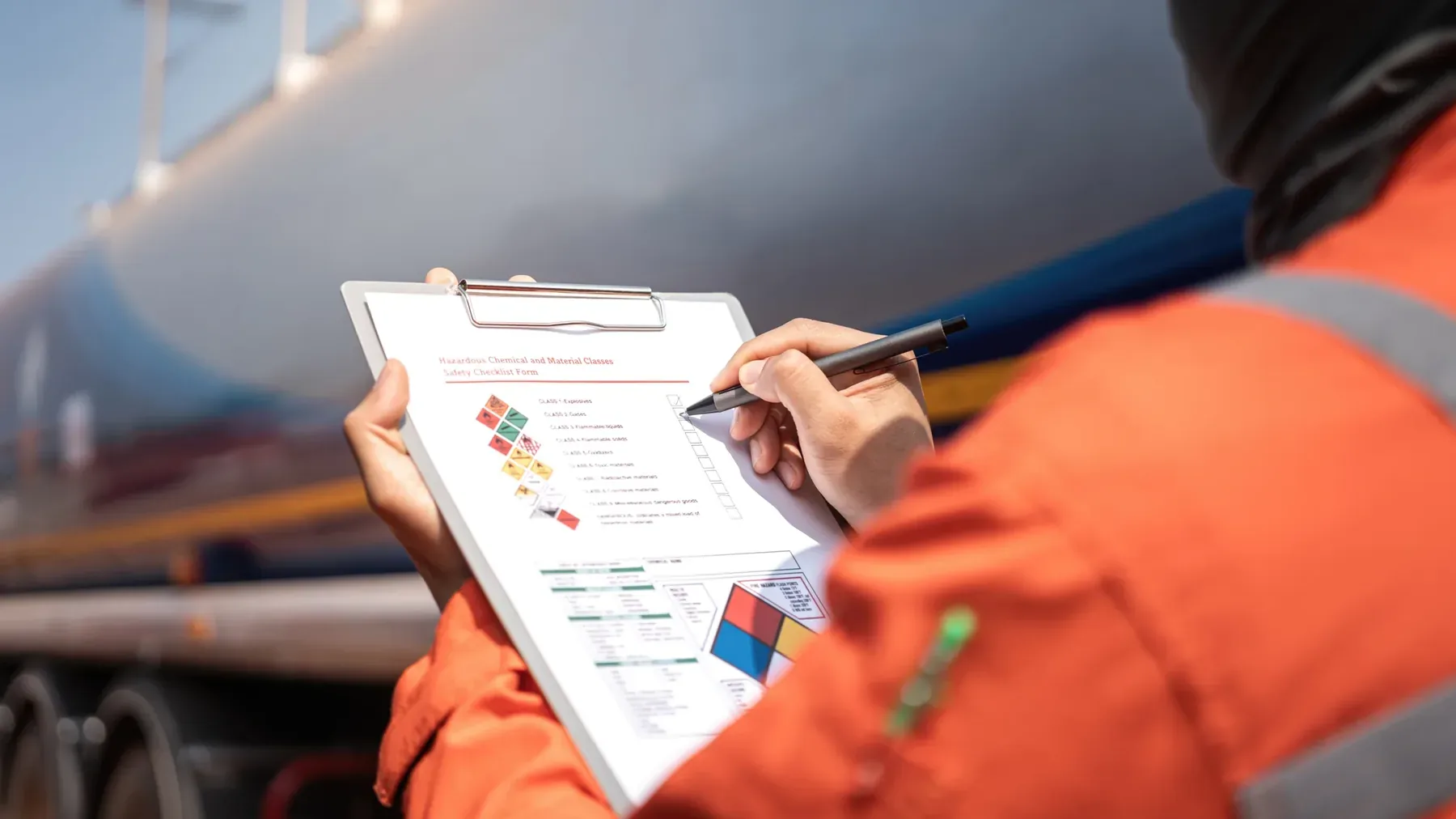
Hazardous waste management is a controlled process, not a single collection. It starts with correct classification, then storage and segregation that keep incompatible materials apart, and records that trace each consignment from your site to its final destination.
What hazardous waste management covers
Hazardous waste is waste that poses a risk to human health or the environment because of the substances it contains. Common industrial examples include waste oils, solvents, acids and alkalis, lead-acid and lithium batteries, oily sludges, contaminated packaging, waste containing ozone-depleting substances, and many process residues from manufacturing, printing, coating and laboratory work.
A material is not hazardous simply because of its name. Classification depends on the composition and the hazardous properties it displays, assessed against the technical guidance used by the regulator. Two wastes with the same description can classify differently if the concentration of a hazardous substance differs. That is why a proper assessment looks at the process that produced the waste, any safety data sheets, and, where needed, testing.
We can help with hazardous waste management across a site, from a single awkward stream to a full inventory of everything the process generates. The work begins with understanding what you produce and how it is currently stored.
Classification and the List of Waste codes
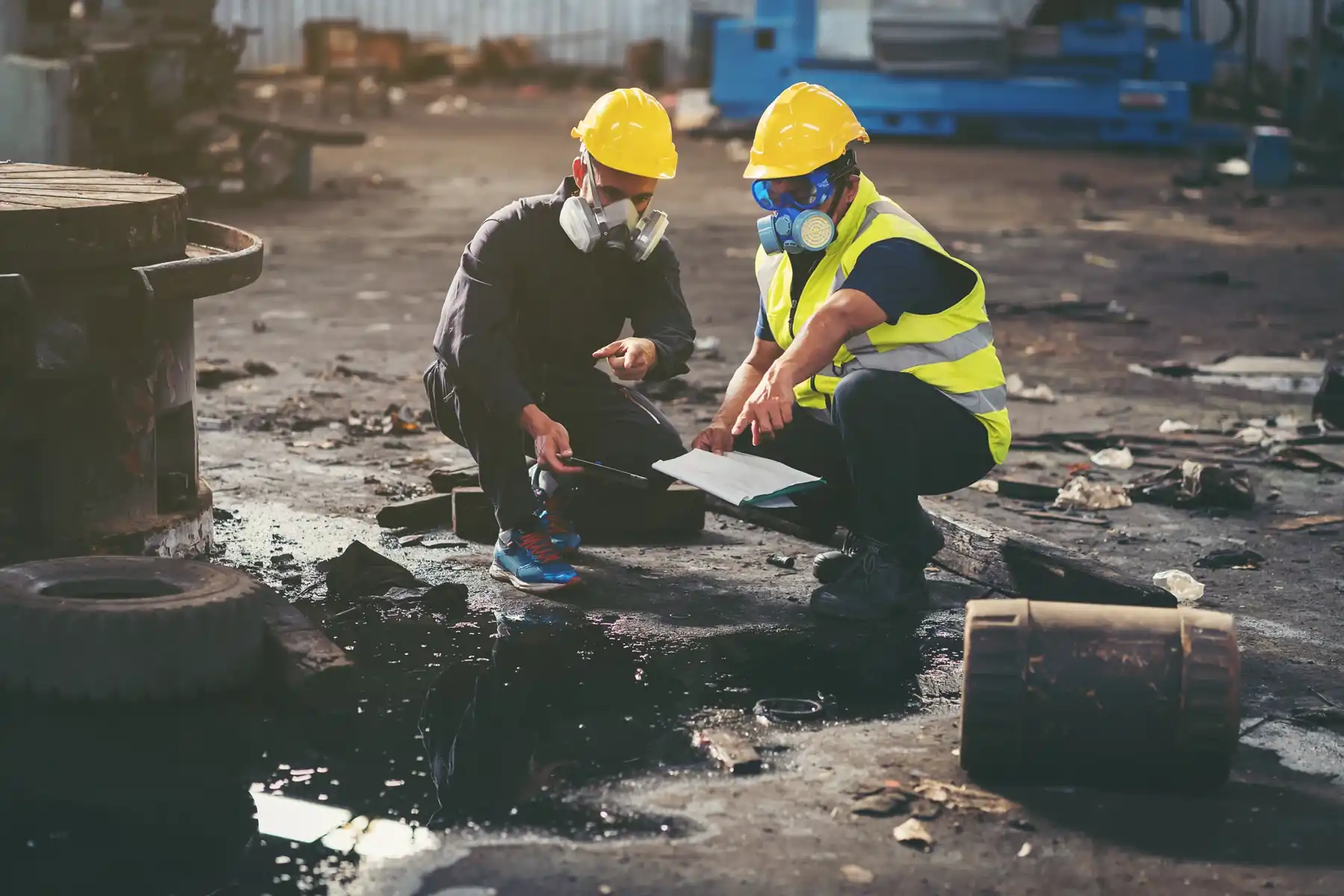
Every hazardous consignment needs a classification and a List of Waste code, sometimes called an EWC code. The code identifies the waste type and whether it is hazardous or non-hazardous. Getting it wrong affects the consignment note, the receiving site’s permit and the treatment route.
Classification is a technical exercise. It considers the hazardous properties of the waste, the concentration of relevant substances, and the physical form. Some entries in the List of Waste are absolute hazardous entries, meaning the waste is hazardous whenever that code applies. Others are mirror entries, with a hazardous entry marked by an asterisk and an alternative non-hazardous entry. The correct entry depends on the assessment.
Where a waste could be hazardous, the assessment should be recorded and kept. It supports the consignment note and gives anyone handling the material the information they need. We can help with classification reviews and with pulling together the information a receiving facility will ask for.
Storage, segregation and labelling
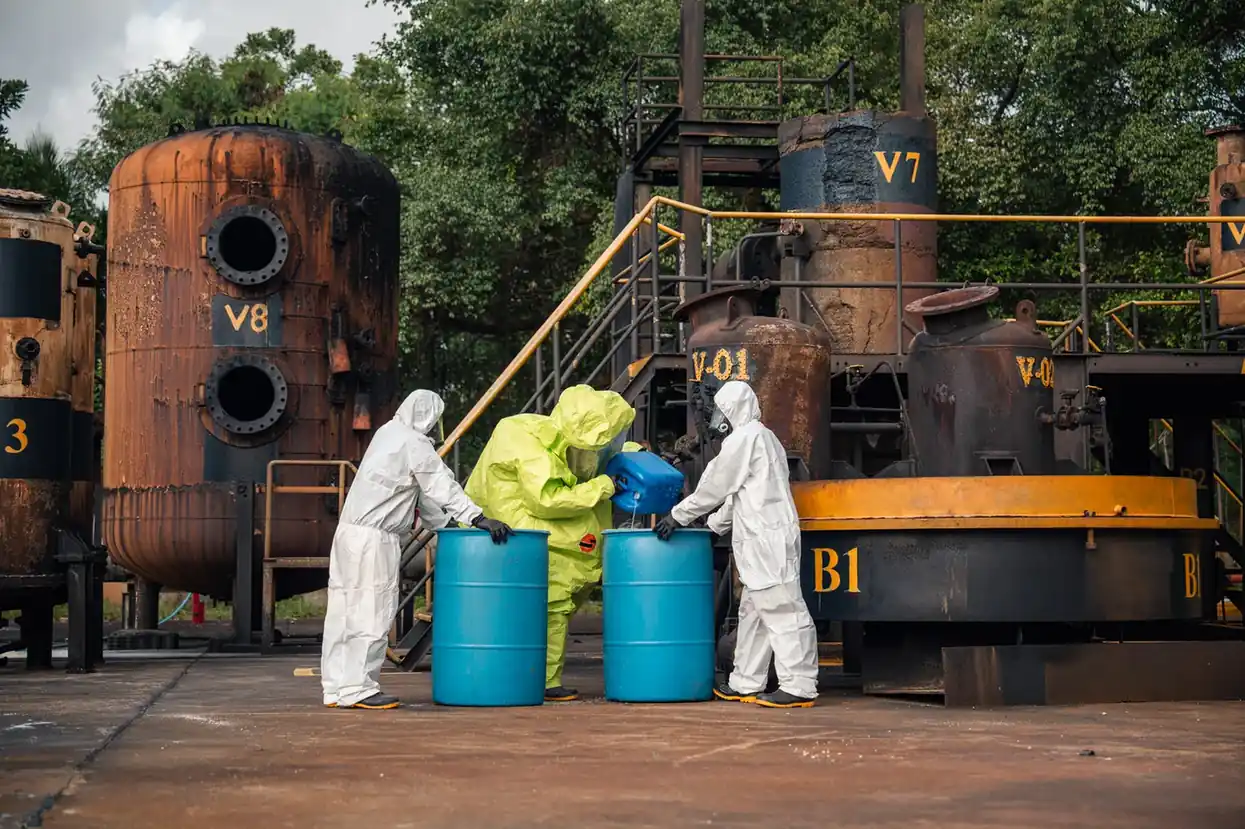
Hazardous waste must be stored so it cannot escape, react or contaminate other materials. The practical points are usually straightforward but easy to get wrong under production pressure.
- Keep incompatible wastes apart. Acids and alkalis, oxidisers and flammable liquids, and water-reactive materials should not share a container or a bund.
- Use containers suited to the waste. A drum that held one chemical may not be suitable for another, and damaged or corroded containers leak.
- Label containers clearly with the waste description and code, and keep them closed except when filling.
- Provide secondary containment where liquids could spill, and keep the bund free of rainwater and debris.
- Separate hazardous waste from non-hazardous waste so the streams do not become mixed.
Mixing hazardous waste with non-hazardous waste can turn a manageable stream into a much larger hazardous one, and it can make the mixture harder to treat. The regulations restrict mixing of hazardous waste, so segregation is not just good practice. It protects the treatment route and the records.
Consignment notes and the producer’s register
In England and Wales, hazardous waste movements are tracked with consignment notes. A consignment note records the producer, the carrier, the receiving site, the waste description and code, the quantity, and the relevant hazardous properties. The note is completed and signed at each stage of the journey.
Producers keep a register of consignment notes and the related returns. The register is kept at the premises where the waste was produced and retained for three years. It is the record that shows where each consignment went and how it was described. If a regulator asks questions, the register is the first thing they will want to see.
Consignment notes support traceability. They do not, on their own, prove that a waste was handled correctly at every stage, so the description and the receiving route still need to be right. Our waste transfer note page covers the non-hazardous equivalent, and the waste duty of care checker helps you work through the questions a collection checklist should answer.
Rules differ across the UK
Hazardous waste management is devolved, and the requirements are not identical in each nation. The table below sets out the main differences to check before arranging a collection.
| Nation | Main rules and regulator | Points to confirm |
|---|---|---|
| England | Hazardous Waste (England and Wales) Regulations 2005, as amended; Environment Agency | Consignment notes and producer register |
| Wales | Hazardous Waste (Wales) Regulations 2005; Natural Resources Wales | Premises registration applies above 500kg a year; consignment notes as in England |
| Scotland | Special Waste Regulations 1996; Scottish Environment Protection Agency | Special waste pre-notification and consignment note system |
| Northern Ireland | Hazardous waste rules administered by NIEA | Pre-notification and consignment arrangements |
If your sites cross a border, the rules of the nation where the waste is produced and where it is received both matter. Confirm the current requirements with the relevant regulator before you move material.
Choosing treatment and disposal routes
The route a hazardous waste takes depends on what it is and what can be recovered from it. Options include recycling and recovery, energy recovery, physico-chemical treatment, and disposal. The waste hierarchy gives priority to recovery over disposal where that is appropriate, but some hazardous wastes may require specialist treatment or disposal.
Treatment decisions turn on the waste’s properties. A solvent may be recoverable by distillation. An oily water may separate into an oil phase and an aqueous phase that need different handling. Aqueous wastes may need treatment before discharge or disposal. Contaminated soils and sludges may need testing before a route can be confirmed.
We can help with selecting routes and with the information a treatment facility needs to accept a stream. For laboratory chemicals and one-off chemical disposal, our sister site at chemicalwastedisposal.co.uk covers the specific requirements, including a guide to consignment notes.
Site-wide programmes and reviews
A single collection solves a single problem. A site-wide programme looks at every hazardous stream, how it is stored, how often it is produced, and whether the current arrangements still fit. That review often finds streams that have been mixed unnecessarily, containers that are past their best, or storage areas that have drifted out of shape.
An inventory is the starting point. It lists each waste, its source process, its approximate quantity, its classification, and its current storage. From there, storage and segregation can be planned, collection frequencies set, and records brought into a consistent format. Our waste audit page explains how a review is structured, and industrial waste disposal covers the wider disposal picture for mixed industrial sites.
Work in confined spaces such as tanks and pits needs a suitable risk assessment and safe system of work. The Confined Spaces Regulations 1997 set specific duties where they apply, including planning for emergencies and using people who are competent for the work.
Records, training and day-to-day control
Good hazardous waste management depends on the people handling the waste day to day. Staff who fill containers, move drums or sign consignment notes need to understand what the labels mean and why segregation matters. Written procedures help, but they only work if the people on shift know where they are and what to do when something is unclear.
Keep the register, the classification records and the consignment notes together and accessible. Review them when processes change, because a new raw material or a changed production method can change the waste. If you are unsure whether a stream is hazardous, do not move it under an assumed classification. Arrange a proper assessment and keep the supporting record on file.
Free online tool
Waste Duty of Care Checker
Review common waste paperwork and collection questions relevant to your site.
Common questions
Frequently asked questions
How do I know if my waste is hazardous?
It depends on the composition and the hazardous properties of the waste, not just its name. An assessment against the technical classification guidance, using process information, safety data sheets and testing where needed, determines the correct List of Waste code and whether the waste is hazardous. Keep the assessment on file to support the consignment note.
How long must I keep hazardous waste records?
In England and Wales, producers keep the register of consignment notes and returns at the premises where the waste was produced for three years. Scotland and Northern Ireland have their own record-keeping requirements, so confirm the position for the nation where the waste arises.
Can I mix hazardous waste with other waste?
Mixing hazardous waste with non-hazardous waste, or mixing different hazardous wastes, is restricted and can make the combined material harder and more expensive to treat. Segregate incompatible wastes, label containers clearly, and keep hazardous and non-hazardous streams apart.
Do the rules differ in Scotland and Northern Ireland?
Yes. Hazardous waste is devolved. Scotland uses the Special Waste Regulations 1996 with pre-notification through SEPA, and Northern Ireland has its own pre-notification arrangements administered by NIEA. England uses the Hazardous Waste (England and Wales) Regulations 2005, as amended. Wales uses the Hazardous Waste (Wales) Regulations 2005, including premises registration where 500kg or more of hazardous waste is produced or held at a premises in a 12-month period.
Request a quote
Complete the form and we will get back to you.