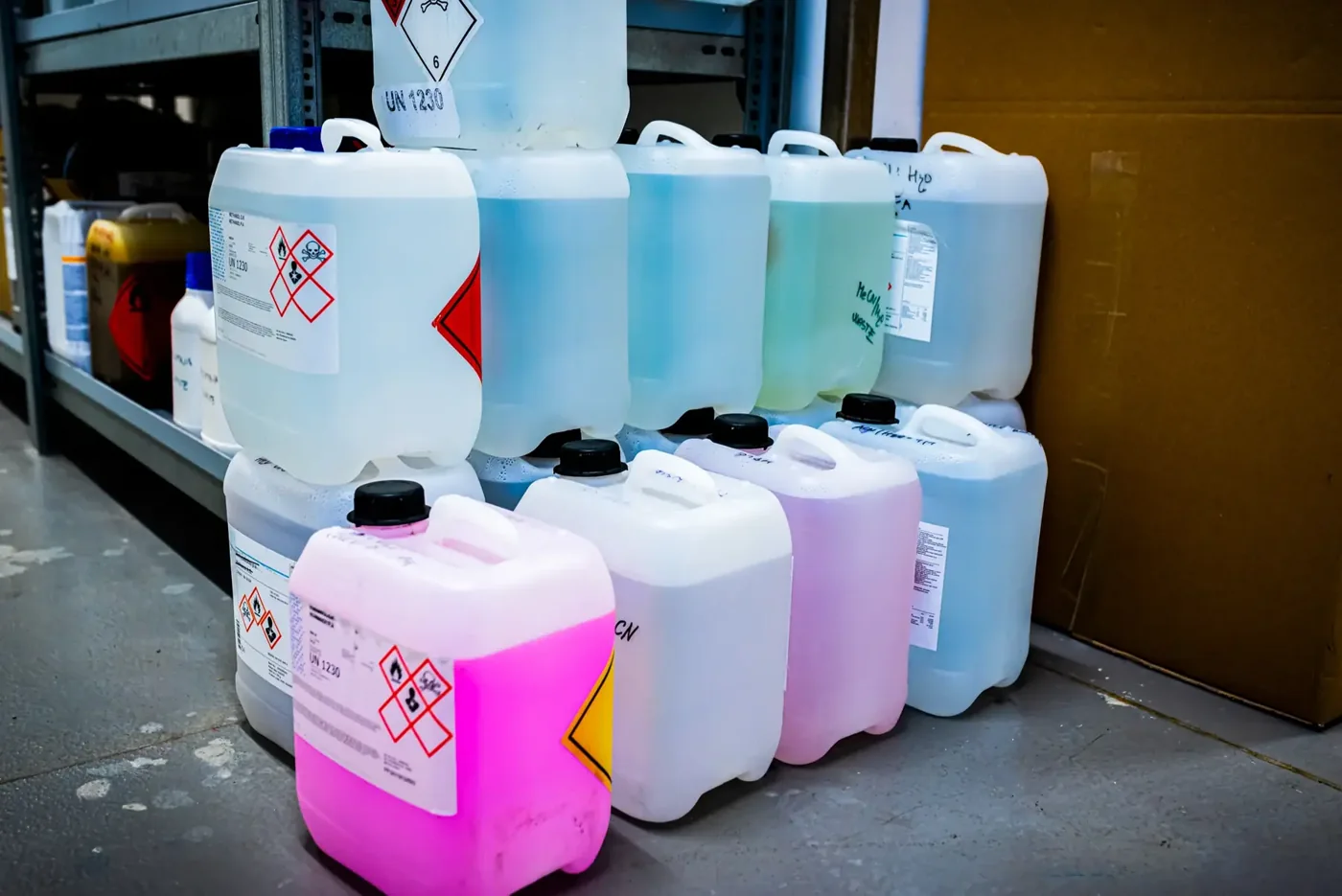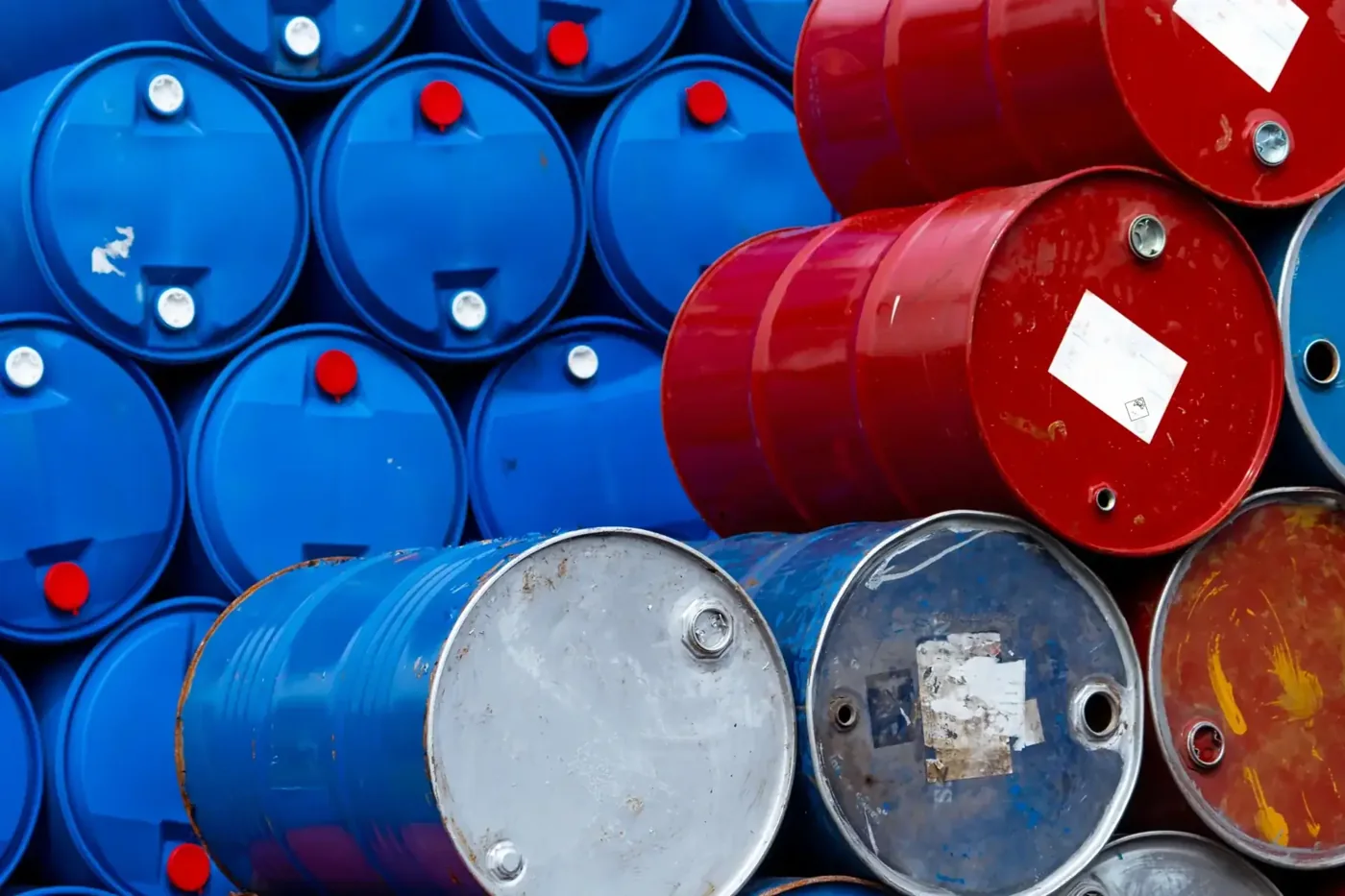
Empty chemical drums can enter ordinary recycling only when their contents and condition make them suitable for a non-hazardous waste route. A drum that has been emptied but still contains hazardous chemical residues is classified as hazardous waste in England. Being empty does not automatically make the packaging safe for a conventional recycling container.
For factories and industrial sites, the important distinction is between a drum with no hazardous contamination and one that retains residues of hazardous substances. The material used to manufacture the drum is only part of that assessment.
When does an empty drum remain hazardous?
The Environment Agency distinguishes clean packaging from packaging contaminated by hazardous substances. Its packaging waste classification guidance specifically covers drums and intermediate bulk containers.
A steel drum that previously held a hazardous chemical may still require hazardous waste management after its usable contents have been removed. The same principle applies to plastic drums. Residual liquid, deposits on internal surfaces and other contamination can affect the waste classification.
There is also a difference between empty packaging and a container that still holds a quantity of discarded chemical product. Packaging waste codes apply to empty containers. Where product remains, the contents need their own assessment rather than automatically treating the complete item as empty packaging.
Which previous contents affect classification?
The starting point is identifying what the drum originally contained. A manufacturing site might generate containers from several different operations, including cleaning, coating, lubrication and chemical production.
Useful information includes:
- The original product name and supplier identification.
- The relevant safety data sheet and information about hazardous constituents.
- Whether the drum contains remaining liquid, sludge or deposits.
- Whether different substances have been stored in the container.
- Whether the container’s history is known and documented.
A hazard label provides important information, but it should be considered alongside the actual contents and waste condition. An unlabelled drum is not necessarily uncontaminated, particularly where labels have deteriorated or containers have been reused.
For sites producing many containers, keeping drums associated with their original product groups makes subsequent identification easier. Mixed piles of unidentified packaging create additional work because individual container histories may need to be established.
Which waste code applies to chemical drums?
For empty packaging contaminated with hazardous substances, the relevant code is 15 01 10*. The asterisk identifies hazardous waste.
Clean, non-hazardous packaging has material-specific codes. These include 15 01 04 for metal packaging and 15 01 02 for plastic packaging. Empty packaging contaminated only with non-hazardous substances can also fall under the appropriate non-hazardous packaging code.
These distinctions are especially important when identical-looking drums have held different products. Two metal containers of the same size and construction may require different collection arrangements because their residues differ.
Should drums go to recycling or specialist collection?
The appropriate route follows the classification, not simply the presence of a recycling symbol or the resale value of the metal.
- Establish whether the container is empty. If it still contains discarded product, identify and assess that material before selecting a packaging waste route.
- Identify any contamination. Use the previous contents and available product information to determine whether hazardous residues remain.
- Assign the waste classification. Distinguish clean or non-hazardous packaging from hazardous contaminated packaging.
- Choose a suitable collection arrangement. Keep containers requiring different waste routes separate and confirm that the receiving operation accepts the classified waste.
A hazardous classification does not necessarily mean the drum’s material can never be recovered. It means ordinary recycling cannot be assumed appropriate, and any recovery must take place through an authorised route capable of handling that waste.
Where drums from multiple production lines are accumulated together, a designated holding area with clear identification helps prevent unsuitable containers entering the normal recycling stream. This can be incorporated into existing factory waste arrangements without changing how clean packaging is collected.
For containers retaining hazardous residues, the appropriate starting point is hazardous waste management. The practical decision is whether the individual drum qualifies as non-hazardous packaging, rather than whether it appears empty from the outside.