Workshop service bays should have clearly identified collection points for waste oil, coolant and brake fluid, with each liquid directed into its own suitable container. Separating these fluids where they are generated is more reliable than trying to identify them after they have entered a shared waste tank.
The arrangement needs to suit the work performed at each bay. An engine servicing area produces different waste from a brake repair station, while a general maintenance bay may generate several liquid types during one shift.
Start with the fluids generated by each service activity
Before positioning collection equipment, identify which operations actually take place in each area. A workshop’s fluid streams may include:
- Waste engine oil: Used lubricating oil removed during servicing and engine repairs.
- Gear and hydraulic oils: Fluids requiring identification according to their oil type and characteristics.
- Antifreeze and coolant: Used cooling system liquids, which require assessment according to their composition.
- Brake fluid: Fluid removed during repairs, replacement and hydraulic system servicing.
- Other liquids: Washer fluid, oily water and fuel-related wastes that should not enter whichever container happens to be nearest.
The Environment Agency’s vehicle and oily waste classification guidance identifies distinct categories of workshop liquids and states that these fluids must not be mixed.
This makes the initial identification of each liquid an important part of the servicing operation. A container marked simply ‘waste fluid’ does not give technicians enough direction when several different liquid streams are produced.
Assign collection equipment to the correct stream
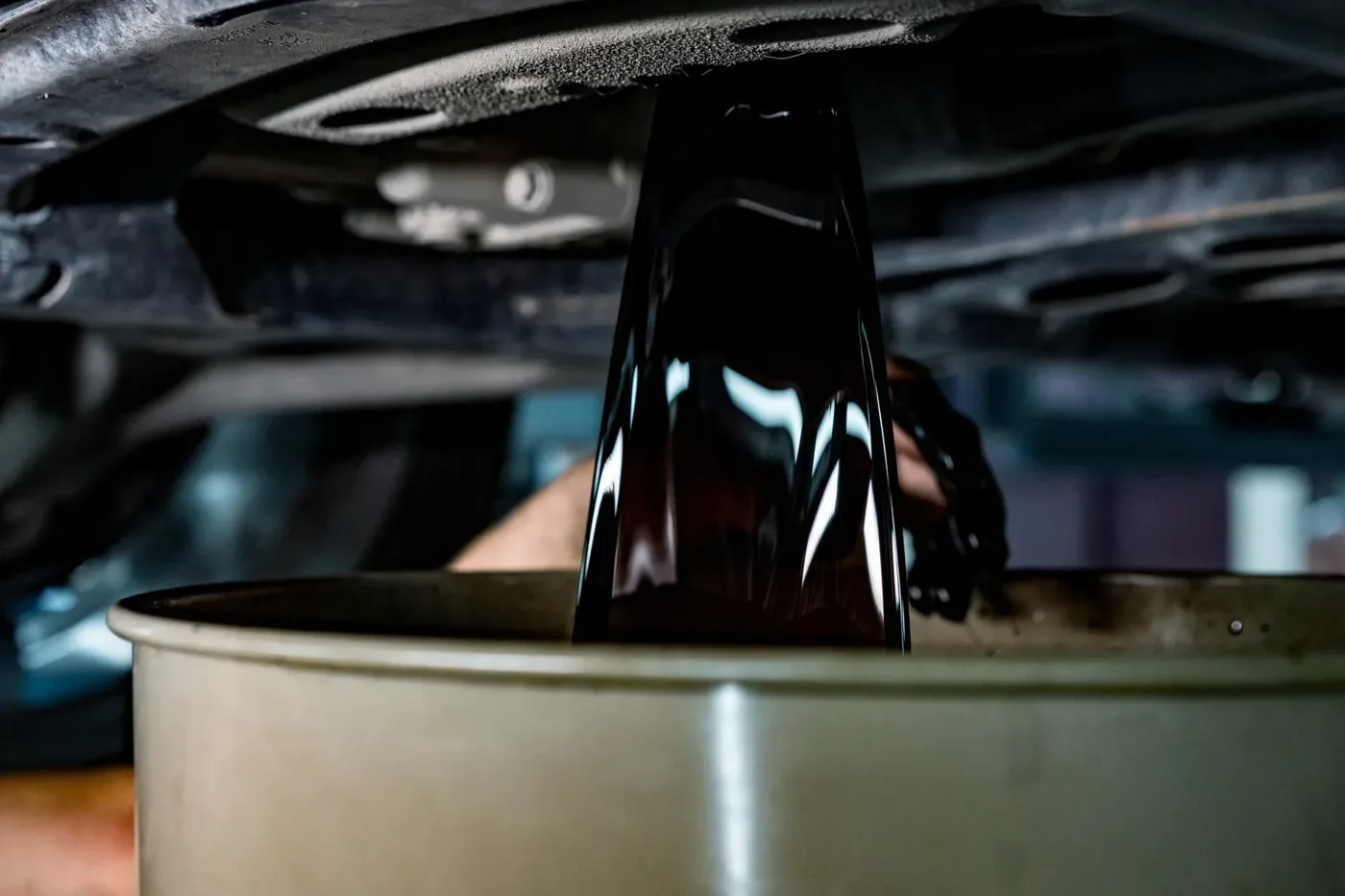
A workable layout gives each regularly generated liquid a designated receiving point. For example, an oil collection unit can serve oil changes, while separate containers can receive coolant and brake fluid.
The position matters as much as the label. If the coolant container is located far from the area where cooling systems are drained, technicians may need to carry waste unnecessarily across the workshop. Placing suitable collection equipment near the relevant operation can reduce these movements.
Each container should have a durable, understandable identification that reflects its actual contents. Using different labels and clearly defined locations helps distinguish fluids even where the containers have similar shapes.
Portable draining equipment also needs consideration. A mobile drain unit used for waste engine oil should not subsequently be treated as a general-purpose receptacle for antifreeze or brake fluid. The identity of the waste must remain clear throughout the transfer process.
Keep coolant and brake fluid separate from waste oil
Coolant and brake fluid should not be treated as interchangeable forms of waste oil. In England, brake fluid is listed as hazardous waste under code 16 01 13*.
Antifreeze requires a distinction between material containing hazardous substances, coded 16 01 14*, and antifreeze without those substances, coded 16 01 15.
Waste engine, gear and lubricating oils have their own hazardous waste entries within chapter 13. Their specific codes depend on the type of oil. For these reasons, a single workshop liquid category is not an adequate description of all three streams.
Separate containers also make it easier to estimate quantities. A workshop manager can distinguish the amount of waste oil produced from the volume of coolant collected rather than relying on an unexplained total from a mixed tank.
Transfer identified waste into bulk storage
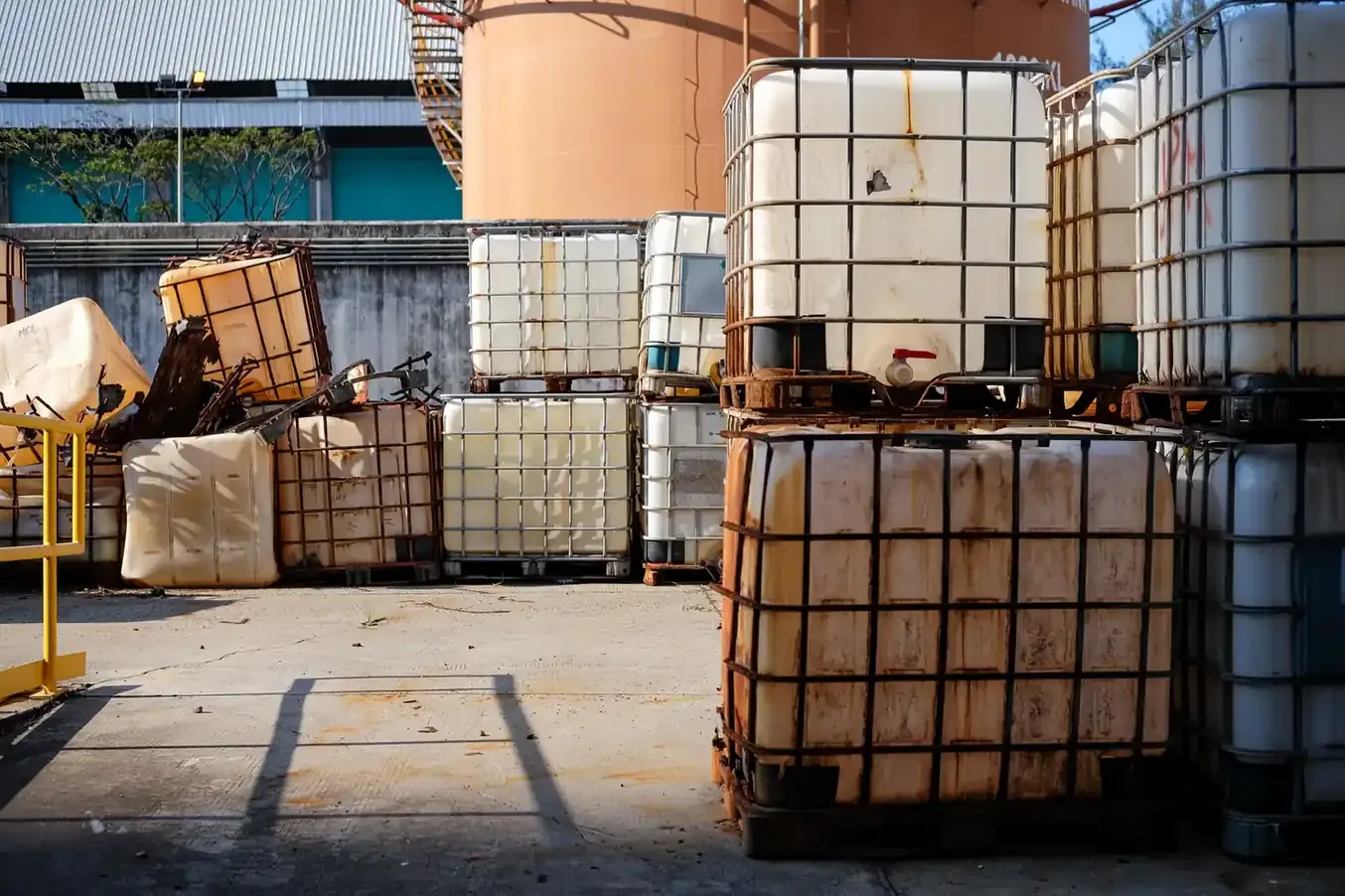
Once collected at the service bay, the liquid should move to the corresponding identified bulk container or agreed collection point. The receiving container must be suitable for the particular fluid, with appropriate containment arrangements.
The handover between the service bay and storage area is a common place for confusion. Simple measures can help:
- Use matching waste descriptions at the bay and bulk storage point.
- Keep dedicated transfer equipment associated with the intended liquid.
- Ensure the receiving container is identified before transfer.
- Record the relevant waste description and quantity for collection.
For any liquid that has already been mixed or cannot be confidently identified, the next step is assessment of the actual waste, rather than assigning it to an oil container by appearance.
A consistent bay layout makes waste oil disposal easier to organise because the oil stream retains a clear identity from servicing through to collection. It also gives workshop staff a straightforward arrangement for the other fluids they handle.