
Waste services for industry
Construction Waste Management
Construction sites produce mixed, heavy and sometimes hazardous waste in short bursts. Getting classification, segregation and paperwork right early helps reduce rejected loads, unnecessary stockpiling and delays. We can help with construction waste management across the main streams.
What construction waste management involves
Construction and demolition work generates waste in phases. Groundworks produce soils, stones and sometimes made ground. Frame and fit-out stages produce timber, plasterboard, metals, packaging and plastics. Strip-out adds fixtures, glazing, cables and sometimes insulation. Each stream behaves differently when you try to move it, and each carries its own classification and documentation questions.
Most construction waste falls under Chapter 17 of the List of Waste, which covers construction and demolition waste including road construction. Chapter 17 contains both absolute non-hazardous entries and mirror entries. A mirror entry means the same description can be hazardous or non-hazardous depending on the substances present. You cannot decide which applies from the material name alone. That decision needs the composition, the source and, where relevant, testing.
We can help with construction waste disposal and removal across these streams, including the classification questions that decide how each load is handled.
Soils, stones and dredging spoil
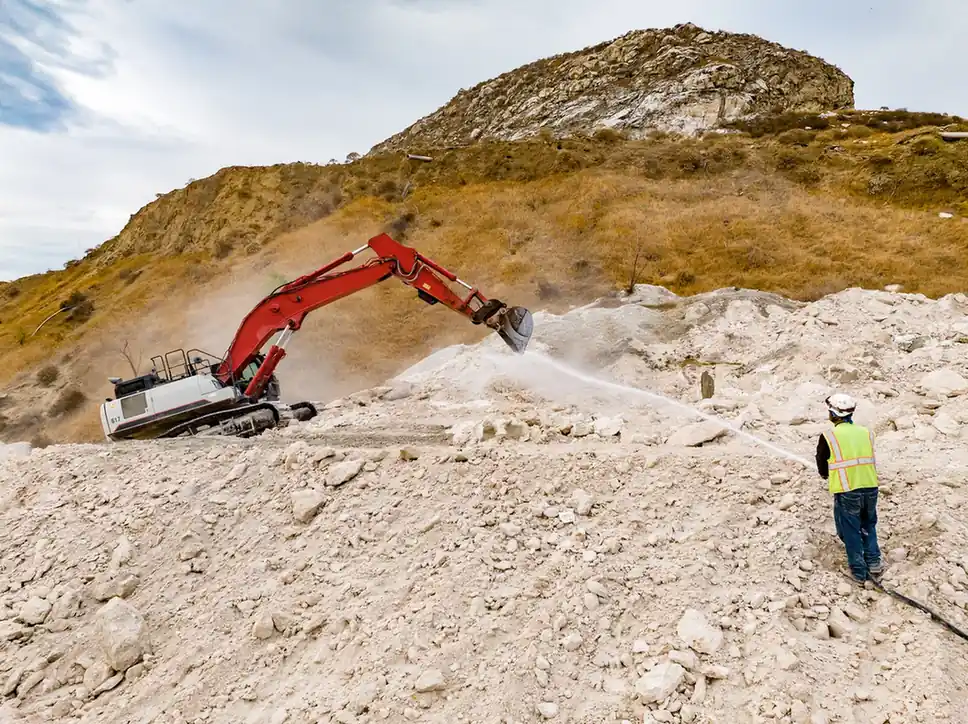
Excavated material is often the largest single volume on a site, and the most commonly misjudged. Clean natural soils and stones have a non-hazardous entry. Made ground, former industrial land and material near fuel storage or old infrastructure may not. Contaminants of concern typically include heavy metals, hydrocarbons, asbestos fibres and, on some sites, sulphates or other soluble species.
Soil classification should be based on adequate information about the source and composition. Where contamination is plausible or the composition is not sufficiently known, representative sampling and testing may be needed. A desk study and site history help define that assessment, and any sampling needs to represent the material being classified. Where material is destined for landfill, waste acceptance criteria testing serves a separate purpose: it supports the landfill’s acceptance decision and does not replace hazardous waste classification.
Where ground conditions suggest contamination rather than routine surplus soil, the assessment work is a separate exercise.
Plasterboard, timber and metals
Gypsum-based waste such as plasterboard needs separate consideration where waste is being sent to landfill. Environment Agency guidance for England says gypsum-based waste must not be deposited in a landfill cell that accepts biodegradable waste and should be separated for reuse or recovery where possible. Keeping plasterboard separate also reduces the risk of a mixed load being rejected or requiring additional sorting.
Timber grades vary. Clean untreated offcuts, pallets and board have different outlets from painted, treated or composite timber. Metals are generally the easiest stream to recover, but mixed metals, cable and items containing oils or refrigerants need separating before they go for processing. See scrap metal recycling for how those streams are handled.
Asbestos and other hazardous streams
Asbestos can affect the programme and waste route where it is present. It can occur in insulation, cement products, floor tiles, textured coatings and other building materials, and it is not always obvious from a visual inspection. Survey, removal and handling requirements depend on the material, its condition and the work being carried out.
Other hazardous streams on construction sites include solvent-based paints and coatings, some sealants and adhesives, fuel-contaminated material, and equipment containing oils or refrigerants. Whether a particular waste is hazardous depends on its composition, not its name. The Environment Agency’s waste classification technical guidance sets out how that assessment is done, and GOV.UK explains the extra requirements for hazardous waste in England.
We can help with hazardous waste management where a site produces a mix of hazardous and non-hazardous material. See hazardous waste management for the wider picture.

Carrier registration for contractors
If your business carries waste that it produced itself, you still need to register as a waste carrier. In England and Wales, construction and demolition businesses that carry their own waste normally register as upper tier carriers. That applies even when the material never leaves your control. Scotland and Northern Ireland run their own carrier registration systems with different regulators and thresholds, so a registration held in one nation does not automatically cover work in another.
Registration is separate from the duty of care. You still need to check that anyone you pass waste to is authorised, describe the waste accurately, and keep the transfer paperwork. See waste carrier licence for how registration works in each nation.
Site waste management plans
Site waste management plans were statutory in England for a period, but the regulations were revoked in 2013. They are no longer a legal requirement there. They are still requested by many clients, main contractors and frameworks, and they feed into BREEAM and similar assessment schemes. A workable plan records the waste streams a project expects, how each will be segregated, where it will go and who is responsible.
The plan is most useful when it is written before groundworks start and updated as the project changes. A plan produced at handover to satisfy a checklist rarely reflects what actually left site. See waste management plan for what a usable plan contains.
Segregation, storage and access
Segregation decisions on a construction site are usually driven by space and access as much as by waste type. A tower crane site with no ground-level storage cannot run the same segregation as a large greenfield site. Practical points that decide the outcome include:
- Whether skips and containers can be placed where they can be loaded and collected without blocking works.
- Whether separate containers for plasterboard, timber, metals and mixed waste can be kept apart in practice.
- How material is moved from upper floors, and whether chutes or hoists affect how mixed the load becomes.
- Whether hazardous material can be stored securely and separately before collection.
- What happens to waste when the site is tight, and whether compaction or on-site processing changes the volumes.
Roll on roll off containers suit bulky demolition arisings and soils. Smaller skips suit fit-out waste where volumes are lower and space is tighter. See roll on roll off skip hire and commercial skip hire for how container choice interacts with site layout.
Documentation and traceability
Every transfer of controlled waste needs a waste transfer note or, for hazardous waste, a consignment note. The description must be accurate enough for the receiving site to handle the load correctly, including the waste code, the quantity and the container type. Waste documentation supports traceability. It does not, by itself, prove that a waste was handled lawfully, and it does not remove your duty of care.
Digital waste tracking is being introduced in phases across the UK. From 1 October 2026, permitted or licensed waste receiving sites in England and Wales must report relevant waste receipts through the new service. Northern Ireland and Scotland have later phase-one start dates, and waste collectors are covered by a later phase. See digital waste tracking for the current scope and timetable.
We can help with construction waste management across demolition, groundworks, fit-out and refurbishment projects, including the classification and documentation questions that decide how each stream moves.
Free online tool
Waste Duty of Care Checker
Review common waste paperwork and collection questions relevant to your site.
Common questions
Frequently asked questions
Do construction companies need a waste carrier licence to move their own waste?
Yes, in most cases. In England and Wales, a business that carries waste it produced itself normally needs an upper tier carrier registration. Scotland and Northern Ireland have their own registration systems and regulators, so a registration in one nation does not cover work in another.
Is a site waste management plan still a legal requirement?
No. The regulations that made site waste management plans statutory in England were revoked in 2013. Many clients, main contractors and assessment schemes still ask for one, and a plan written before work starts is more useful than one produced at handover.
Can excavated soil go to landfill as non-hazardous without testing?
Not on appearance alone where contamination is plausible or the composition is uncertain. Classification should use adequate information about the source and composition, with representative sampling and testing where needed. Waste acceptance criteria testing supports a landfill's acceptance decision and does not replace hazardous waste classification.
Why does plasterboard need separating from mixed construction waste?
Gypsum-based waste has specific landfill controls. In England, Environment Agency guidance says it must not be deposited in a landfill cell that accepts biodegradable waste and should be separated for reuse or recovery where possible. Keeping plasterboard separate can also avoid mixed-load rejection or extra sorting.
Can a waste code be decided from the material name alone?
No. Chapter 17 of the List of Waste contains mirror entries, where the same description can be hazardous or non-hazardous depending on the substances present. The classification depends on composition, source and, where relevant, testing.
Request a quote
Complete the form and we will get back to you.